
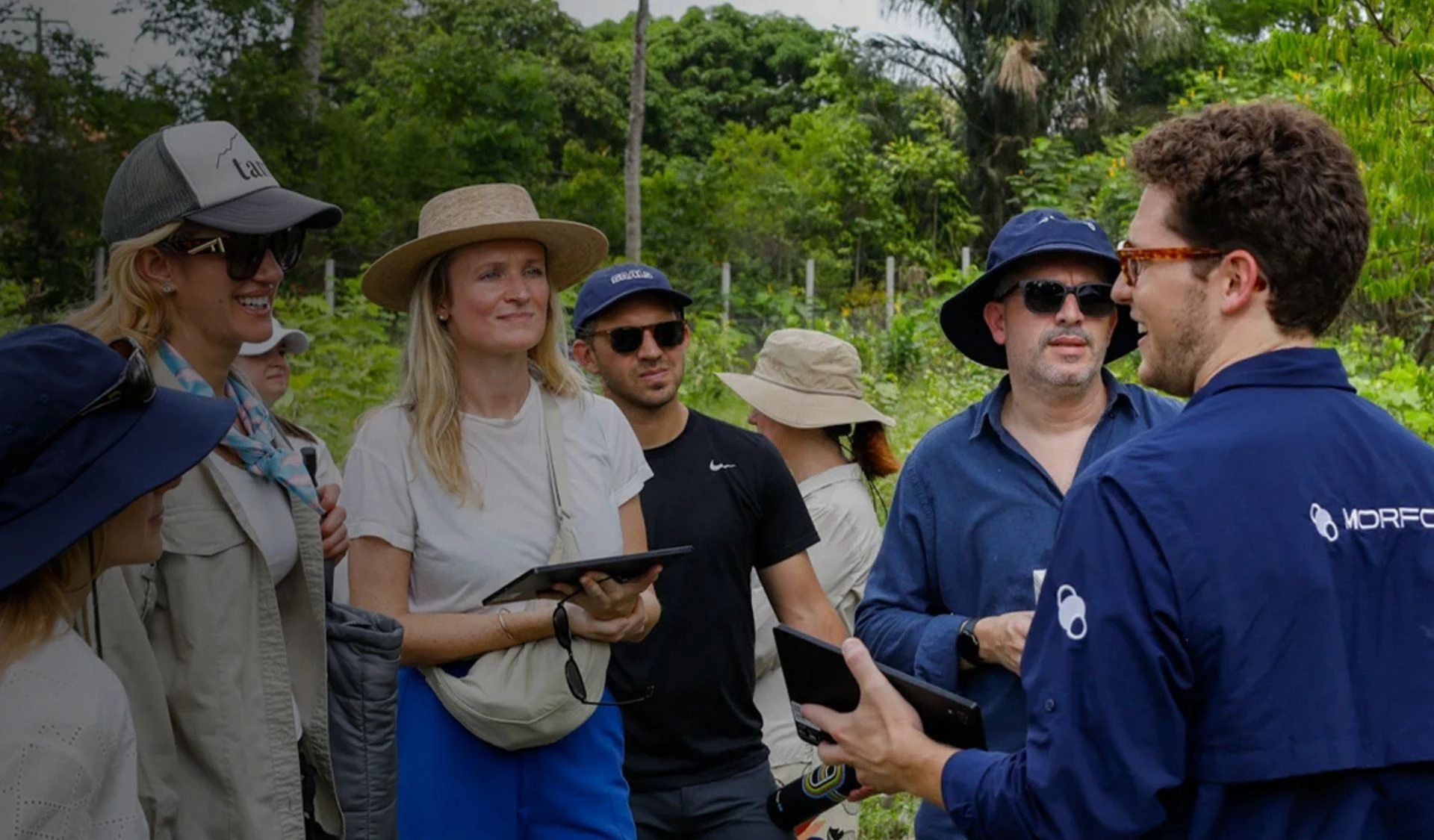

Quand les gens visitent des sites de restauration, ils s'attendent généralement à voir des résultats.
Des arbres établis. Une canopée en formation. Des signaux visuels clairs indiquant que le projet « fonctionne ». Cette attente est compréhensible. C'est aussi la raison pour laquelle la plupart des sites ne sont ouverts qu'après plusieurs années.
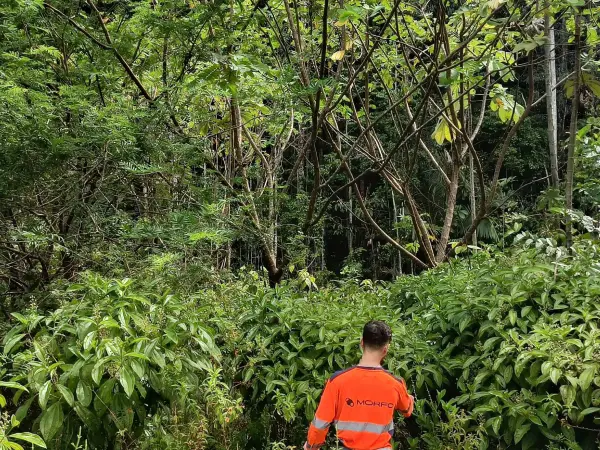
Chez MORFO, nous choisissons parfois un calendrier différent. Au cours des dernières années, nous avons amené des visiteurs sur plusieurs sites de restauration au Brésil. Ces visites ont eu lieu dans différentes régions et à des moments très différents dans les calendriers des projets, y compris des sites près de Porto Seguro et de Belém. Chaque site a soulevé des questions différentes. Certains étaient plus matures. D'autres en étaient encore à leurs premiers mois. Le site de Belém a particulièrement attiré l'attention. Il a concentré un temps, une énergie et des discussions considérables, pendant et après les visites. Pour cette raison, nous l'utiliserons comme exemple ici.
Cet article explique pourquoi nous acceptons de montrer des sites de restauration à un stade très précoce, lorsque les écosystèmes sont encore en formation et que les résultats ne sont pas encore établis.
Pourquoi les sites à un stade précoce sont rarement montrés
Les stades précoces sont opérationnellement denses et visuellement inégaux, avec un sol qui se comporte différemment sur de courtes distances et des espèces qui s'établissent à des vitesses différentes, ce qui signifie que certaines zones progressent rapidement tandis que d'autres avancent plus lentement ; à cinq mois, les trajectoires sont encore en formation. Il y a aussi une dimension réputationnelle : ouvrir un site aussi tôt signifie accepter l'exposition à des données partielles, des visuels non uniformes et des explications qui nécessitent du contexte, ainsi que le risque de mauvaise interprétation, d'imagerie sélective ou de déclarations sorties de leur contexte.
Pour ces raisons, les sites à un stade précoce restent généralement internes, et ce qui est partagé à l'extérieur tend à être le résultat plutôt que le processus. À Belém, ouvrir le site signifiait accepter ce niveau d'exposition, même si le risque était moindre dans ce cas, car les premiers résultats dépassaient déjà nos attentes.
Le contexte du site de Belém
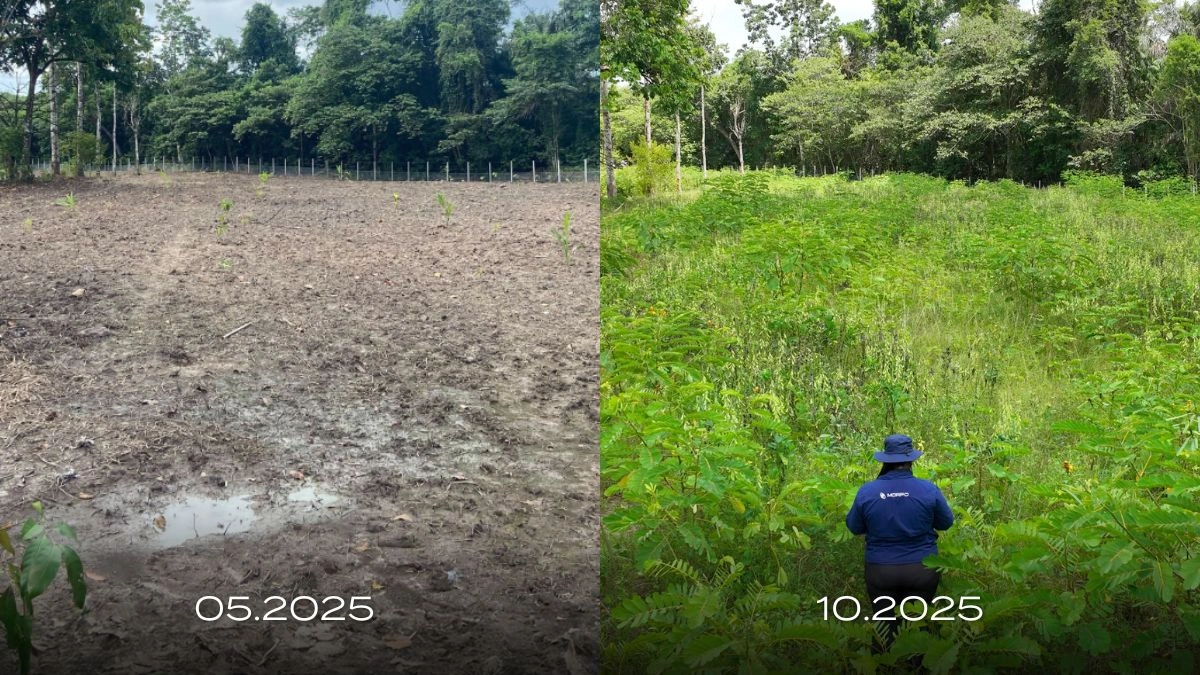
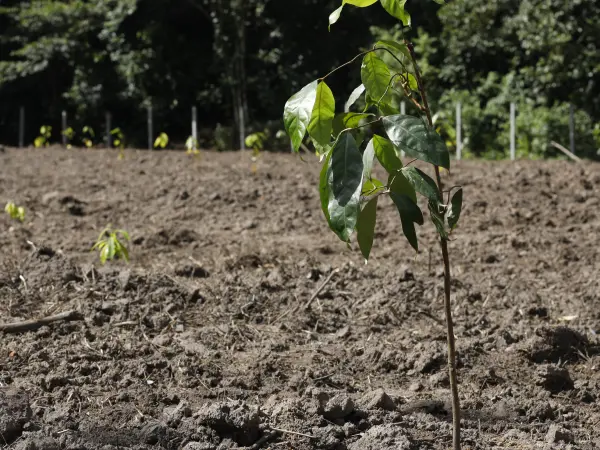
Le site d'1 hectare ouvert pendant la COP30 a été établi sur un terrain précédemment dégradé par l'élevage bovin.
Avant la plantation, le site a traversé une phase de diagnostic combinant criblage satellite, imagerie drone et analyse de sol. La sélection des espèces et les stratégies de déploiement ont été définies sur la base de ces diagnostics et du contexte écologique du site.
La plantation a eu lieu cinq mois avant l'événement.
Au moment des visites :
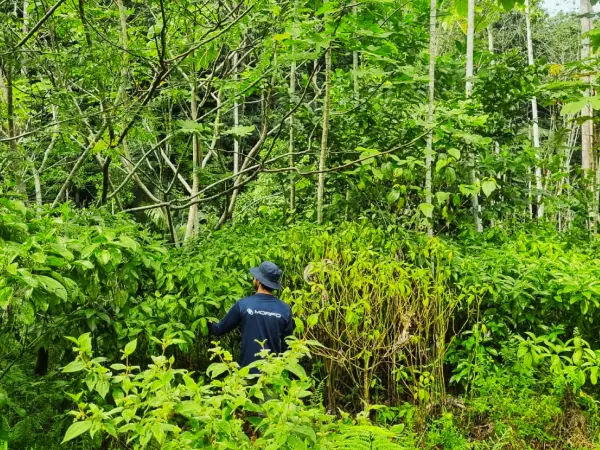
la couverture végétale était encore en formation,18 espèces natives avaient déjà été identifiées sur site,des schémas d'établissement étaient visibles à travers l'hectare,les systèmes de suivi étaient déjà actifs.
Sur deux semaines, 983 visiteurs ont parcouru le site, souvent en petits groupes, accompagnés par des équipes de terrain et des scientifiques.
Ce qui est devenu visible en ouvrant le site tôt
Ouvrir le site pendant l'établissement a rendu observables plusieurs éléments qui ne sont habituellement discutés qu'en théorie.
Premièrement, l'hétérogénéité spatiale était immédiatement visible. Les conditions de sol, les niveaux d'humidité et la densité de végétation variaient significativement au sein du même hectare. Cela a permis d'ancrer les discussions sur les raisons pour lesquelles les stratégies de plantation uniformes tendent à échouer à l'échelle.
Deuxièmement, les trajectoires précoces pouvaient être examinées. Grâce à l'imagerie drone haute résolution et à la détection par IA, plus de 4 000 plants avaient déjà été identifiés et cartographiés. La distribution spatiale de ces plants permettait de discuter des zones où l'établissement progressait bien et de celles qui nécessiteraient une attention plus soutenue au fil du temps.
Troisièmement, des signaux de biodiversité étaient déjà présents. Le suivi bioacoustique a enregistré 106 espèces d'oiseaux pendant la période de monitoring. La proximité d'une forêt mature contribuait clairement à ce nombre. En même temps, l'activité des oiseaux sur le site lui-même, particulièrement tôt le matin et en fin de journée, était notable.
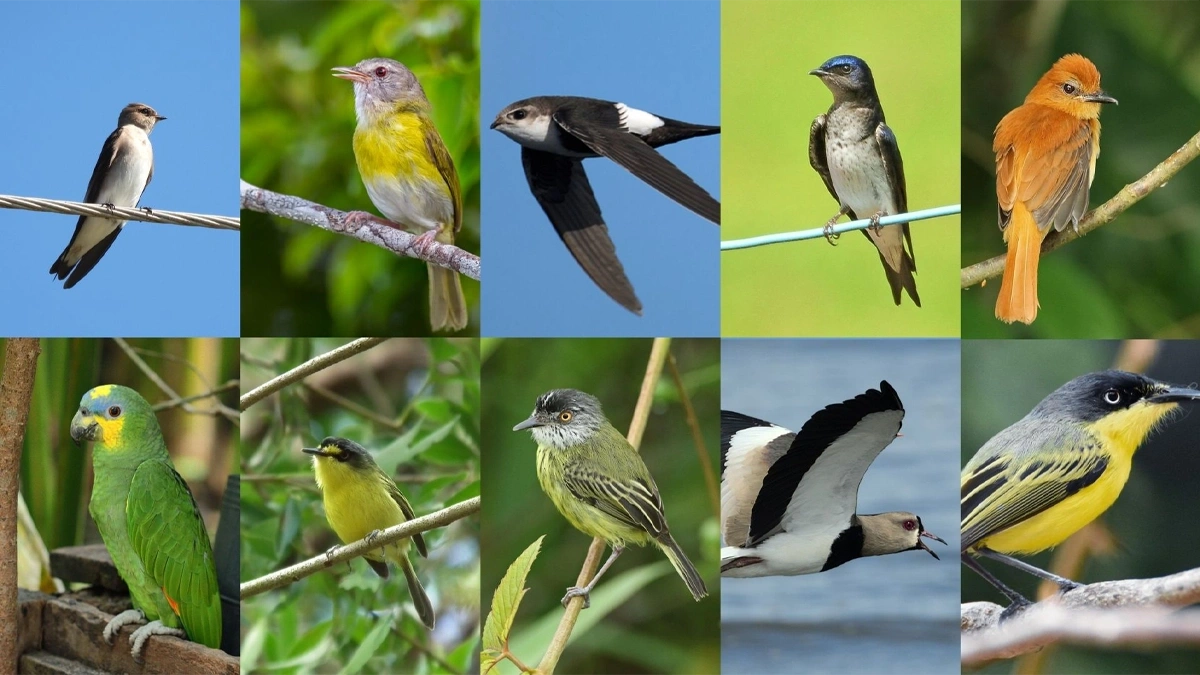
Plusieurs des espèces plantées avaient été sélectionnées spécifiquement pour attirer l'avifaune et encourager la dispersion des graines par les mouvements des oiseaux. Voir les oiseaux utiliser activement le site si tôt fournissait un contexte concret sur la façon dont les choix de conception axés sur la biodiversité peuvent influencer les dynamiques écologiques dès les premiers mois.
Ces observations n'ont pas été présentées comme une preuve de succès. Elles ont été discutées comme des signaux précoces, interprétés dans leur contexte écologique plus large.
La variabilité climatique comme contrainte visible
Ouvrir le site tôt a également permis de discuter ouvertement des défis liés au climat.
Les visiteurs demandaient souvent si l'établissement à un stade précoce pouvait résister au stress climatique. Cela a conduit à des comparaisons avec d'autres sites MORFO, notamment un en Bahia, où les conditions climatiques avaient divergé fortement au sein du même projet. Dans ce cas, les zones avec une densité initiale et une biodiversité plus élevées ont montré une forte résistance, même trois mois après la plantation, tandis que des zones adjacentes réservées aux tests avaient significativement souffert dans les mêmes conditions. Pour les visites effectuées entre les interventions, cela nécessitait des explications.
Ces discussions n'étaient pas théoriques. Elles illustraient comment la variabilité climatique peut affecter les résultats différemment au sein d'un même projet, et pourquoi un suivi précoce est essentiel pour interpréter ce qui se passe sur le terrain avant de tirer des conclusions.
Le suivi comme moyen de détecter les problèmes tôt
Sur le site de Belém lui-même, l'établissement progressait comme prévu et aucune action corrective majeure n'était nécessaire au moment des visites.
Ce qui pouvait être montré en revanche, c'était comment les outils de suivi sont conçus pour détecter les problèmes tôt lorsqu'ils surviennent. Les données spatialisées, la détection de plants et les comparaisons temporelles permettent d'identifier les problèmes émergents avant qu'ils ne deviennent structurels.
Pour les visiteurs, cela était souvent rassurant. L'accent n'était pas mis sur la réaction à un échec sur ce site, mais sur la démonstration du fonctionnement de la visibilité à travers les projets, y compris ceux où les conditions sont moins favorables.
Un site conçu pour être observé
Le site de Belém n'a pas été présenté comme une forêt achevée ou un modèle à reproduire visuellement. Il a été présenté comme un système en observation. Les visiteurs étaient invités à voir comment les signaux précoces émergent, comment la variabilité se manifeste, et comment le suivi aide à interpréter ce qui est visible sur le terrain. Si vous étiez présent à Belém, vous reconnaîtrez peut-être des moments où le contexte a changé la façon dont vous lisiez ce que vous voyiez.
Ce qui a été rendu visible n'était pas la certitude. C'était le processus par lequel l'incertitude est observée, discutée et gérée tant qu'elle compte encore.
—
L'ensemble de l'équipe MORFO souhaite remercier toutes les personnes qui ont pris le temps de visiter nos sites de restauration.
Au cours des deux semaines de la COP30, nous avons été frappés par la qualité des échanges : la curiosité, les questions, les encouragements et, parfois, les félicitations. L'énergie que nous avons ressentie sur le terrain était palpable et profondément motivante.
Ces échanges renforcent notre volonté de continuer à ouvrir des sites et à créer des opportunités de discussion directe sur le terrain, même si le temps, l'accès et les contraintes opérationnelles ne le permettent pas toujours.
Si vous n'avez pas pu visiter nos sites en personne, vous pouvez trouver du contenu de terrain supplémentaire et des visites guidées de sites sur notre chaîne YouTube, où nous partageons des vidéos et des explications directement depuis le terrain.

.jpg)
