
A cookie-cutter recipe that no longer holds
Most restoration projects in Brazil still rely on what Rebecca Montemagni, forest ecosystems engineer at MORFO, calls a "receita de bolo" - a cookie-cutter recipe. Same species list, same density, regardless of location or projected conditions. A species that performs well in Bahia today may not survive there in 2070.
In a recent interview with Um Só Planeta, Rebecca explained the problem: restoration has historically assumed that past conditions would continue. But with rising temperatures, shifting rainfall patterns, and expanding land-use pressure, returning to what was before is no longer a reliable target. The question is not what the forest looked like, but what it needs to withstand.
A framework built around future conditions
MORFO's response is FaBRestor (Future-Based Approach to Restoration), a framework published in Restoration Ecology with co-authors from UFV, UFSCar, UFPR, and the USDA Forest Service. FaBRestor reframes restoration as a forward-looking process. Instead of using fixed historical baselines, it integrates three temporal lenses - past legacies, present conditions, and future projections - to design planting strategies that account for where ecosystems are heading.
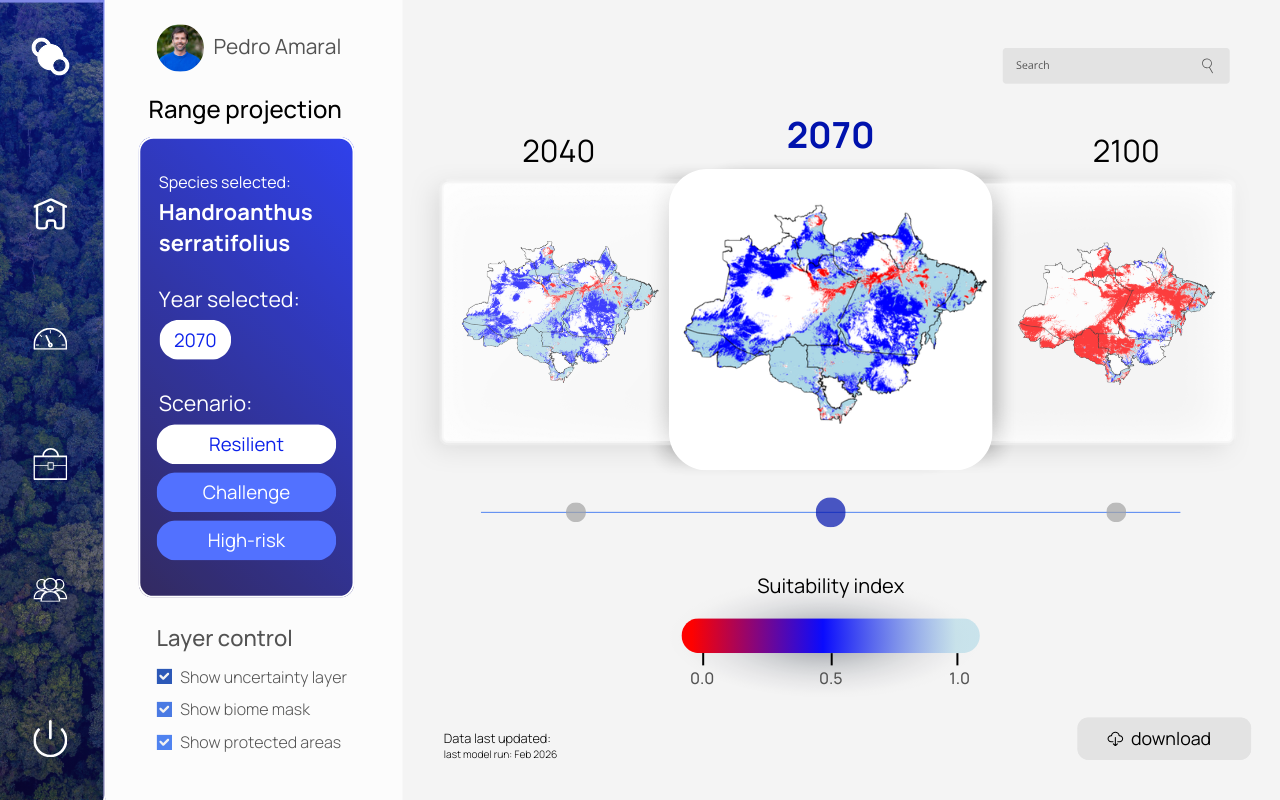
A companion study, also co-authored by Rebecca, models species distribution shifts under three climate scenarios across the Brazilian Amazon, using MaxEnt with bioclimatic and soil variables at three time horizons: 2040, 2070, and 2100. The scenarios correspond to different emission and land-use trajectories:
- SSP1 (Resilient): significant sustainability efforts, low inequality, green energy transition
- SSP3 (Challenge): fragmented governance, high population growth, limited international cooperation
- SSP5 (High-risk): rapid fossil-fuel-driven growth, minimal climate mitigation
For each scenario and time horizon, the tool generates a suitability index (0.0 to 1.0) for every candidate species at a given site. The output is a set of maps showing where species ranges expand, contract, or remain stable - site by site, decade by decade.
What the data shows
In the Um Só Planeta piece, one example stands out: the Ipê-amarelo-flor-de-algodão (a well-known native species) shows a low suitability index for the year 2100, even under the most optimistic scenario (SSP1). Across the Amazon, the maps show a gradual increase in red zones - areas where the species is unlikely to persist.
This is the kind of signal that changes planting decisions. A species that looks like an obvious choice today may be a poor long-term bet. The framework surfaces these risks before seeds go into the ground.
Already informing MORFO's projects
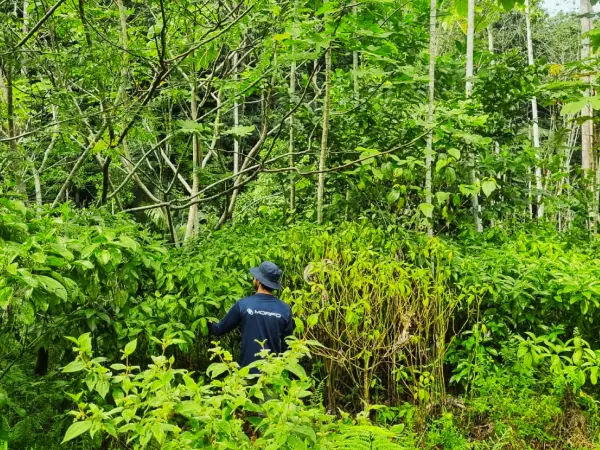
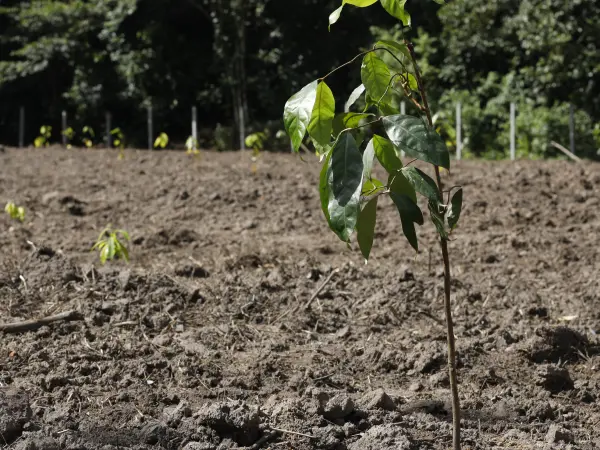
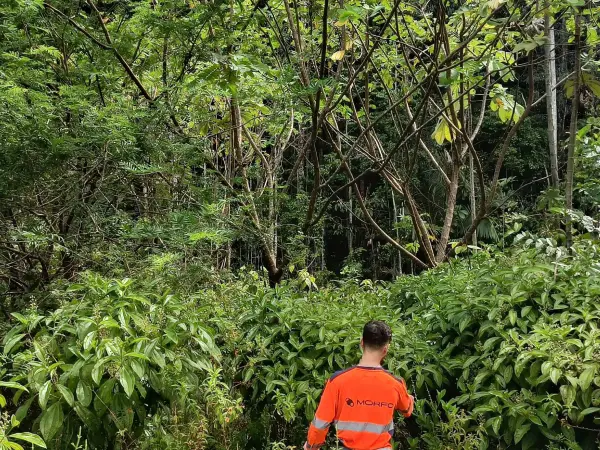
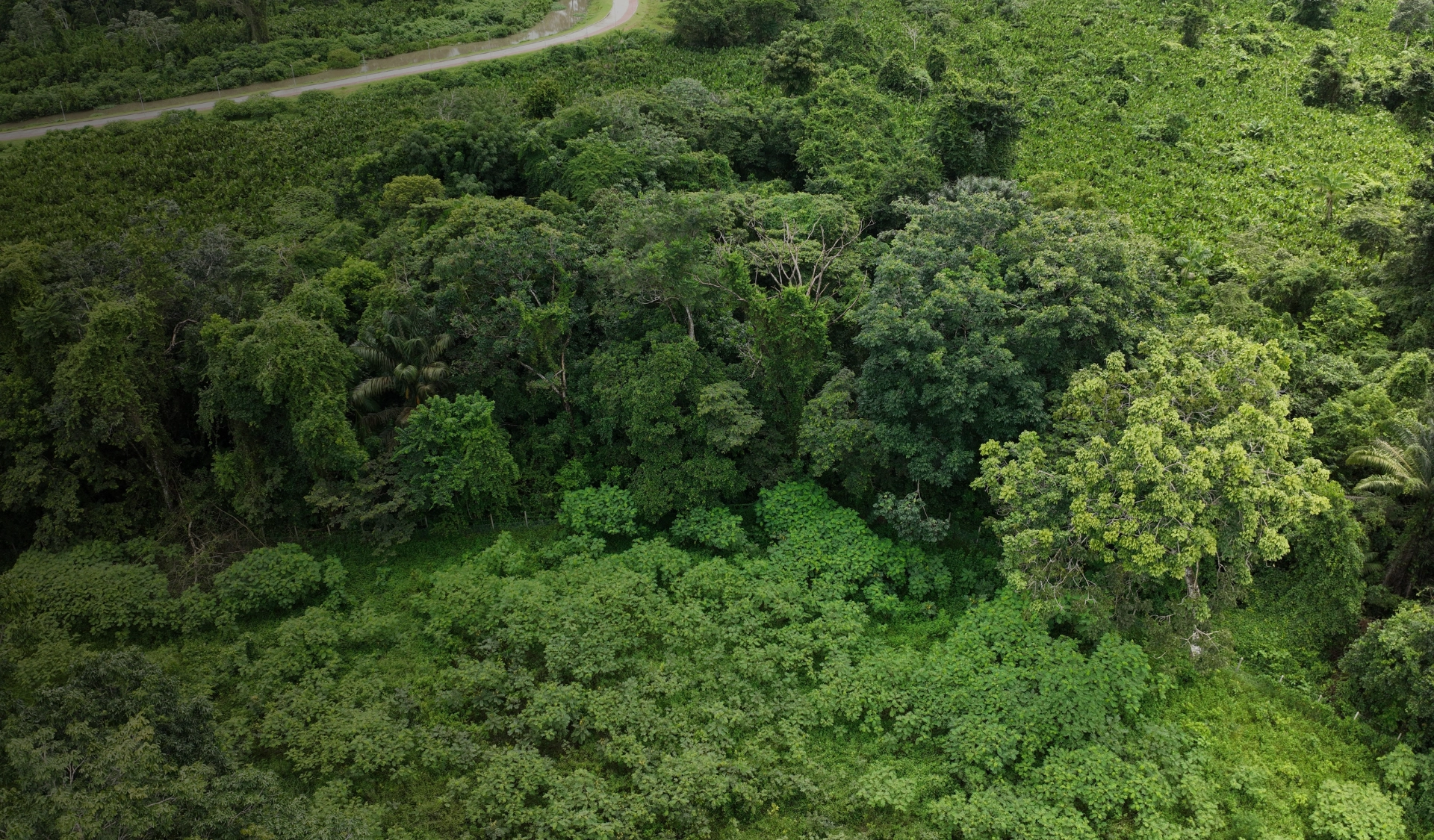
FaBRestor is not a research exercise. The framework is already integrated into species selection on MORFO's active restoration projects in the Amazon and Mata Atlântica. For each site, the team scores candidate species against projected future conditions and adapts planting lists accordingly.
As Rebecca put it in the interview, the approach also extends beyond species modeling. Site-level analysis includes soil diagnostics, and the team works with local communities from the planning stage - not just for execution, but for problem analysis and adaptive management. Traditional knowledge helps ground the projections in local reality, which matters for long-term project durability.
Why it matters
Restoration that ignores climate trajectories risks producing forests that fail within decades. Species mortality rises, carbon commitments fall short, and the investment - both ecological and financial - erodes. Forward-looking species selection does not eliminate uncertainty, but it makes that uncertainty visible and manageable before capital is committed.