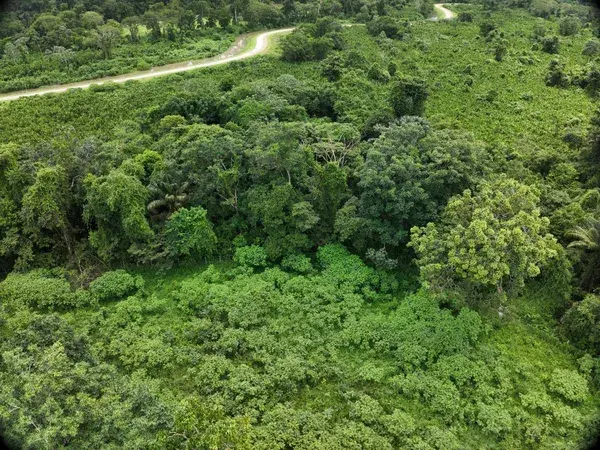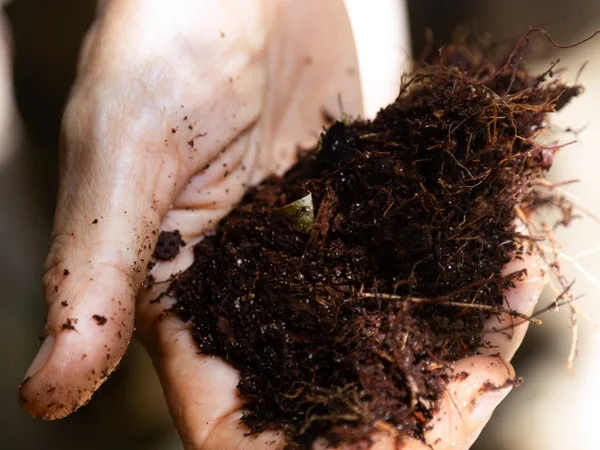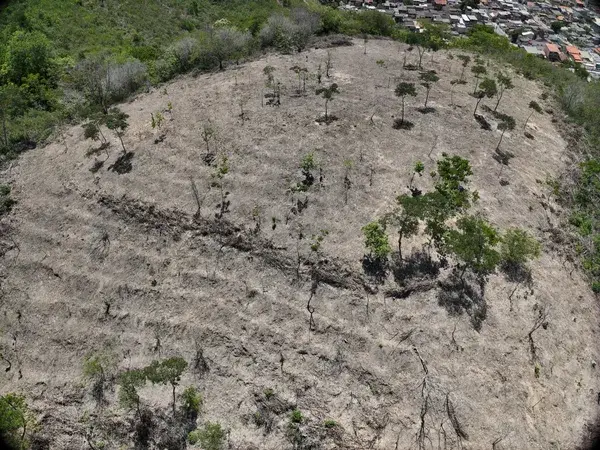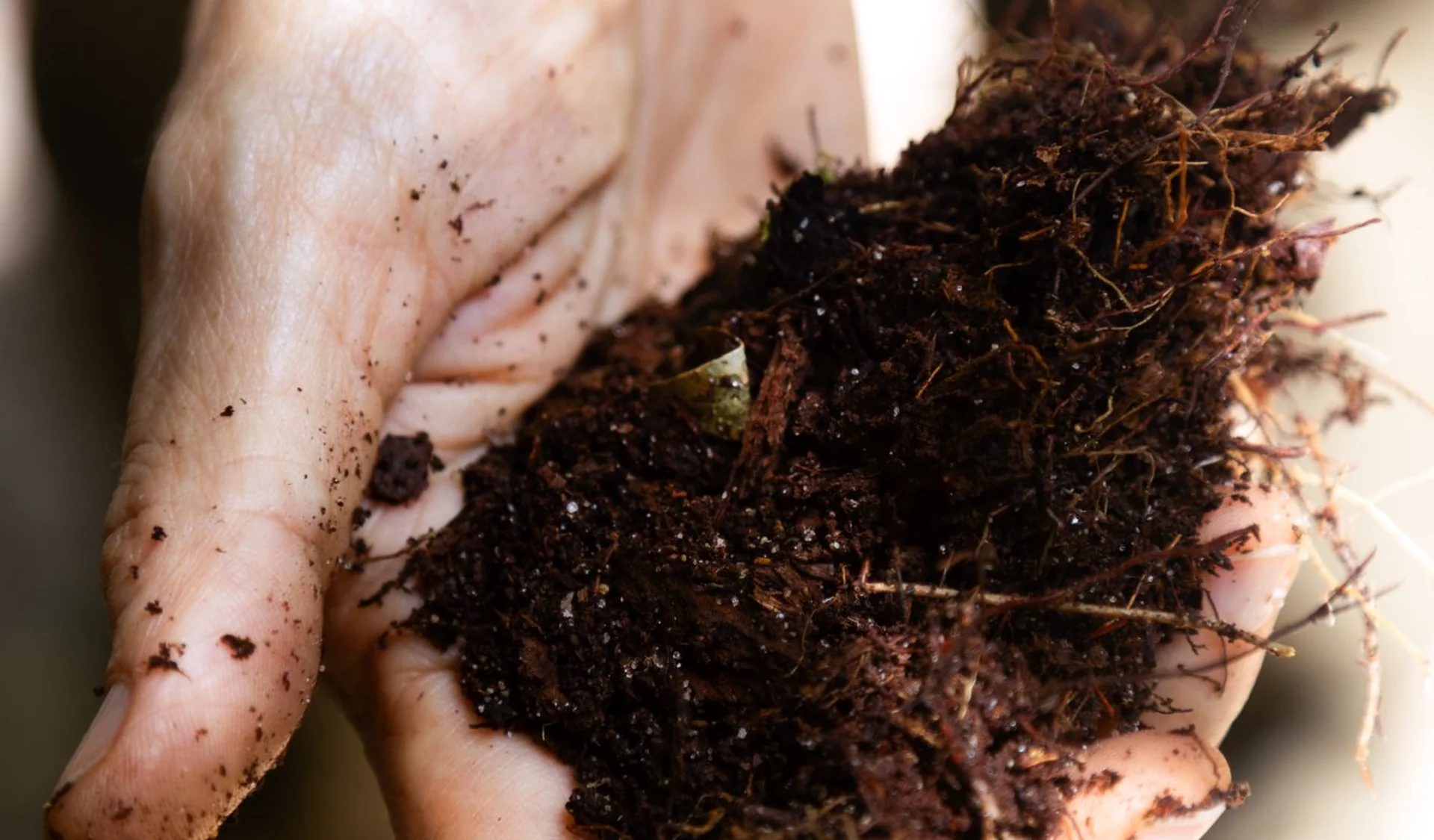

Everyone talks about trees. Almost nobody talks about what is under them.
In restoration financial models, the variables that get the most attention are carbon price, sequestration rate, species growth curves, and project duration. They are important. But they all depend on a variable that is rarely modeled with the same rigor: the soil.
Soil determines which planting method is viable. It determines how many disk harrowings are needed before planting can begin - one pass or five. It determines establishment rates, maintenance intensity, and the speed at which sequestered carbon accumulates. It is the single variable that most directly connects the physical site to the financial model. And it is the one most often treated as a constant.
Soil and method
The choice of planting method is not primarily a question of preference or technology. It is a question of soil condition.
On well-structured soil with adequate organic matter and no compaction layer, line seeding in furrows works efficiently. On compacted soil from decades of cattle grazing, the same method fails. The prescription shifts to deep ripping or subsoiling - an operation that can add R$ 800-1,200 per hectare to the preparation cost.
On former cropland with depleted organic matter but relatively loose structure, one disk harrowing may suffice. On former pasture with thick brachiaria root mats, four to five passes are needed. That difference is a 3-4x multiplier on soil preparation costs.
"Soil analysis is where the method starts. pH below 4.5, compaction at 25cm, organic matter under 1% - those numbers fundamentally shape the method. The species list, the planting approach, the cost per hectare - all shaped by the soil analysis." - Rebecca Montemagni Almeida, Senior Forest Ecosystem Engineer, MORFO

Soil and maintenance
The financial impact of soil quality does not end at planting. It cascades through the first two to three years of the project, which are the most maintenance-intensive period.
On healthy soil, planted species establish root systems quickly, compete effectively with invasive grasses, and form canopy closure within expected timelines.
On degraded soil, the picture changes. Compacted ground restricts root development. Low nutrient levels slow growth. Planted species take longer to compete with invasives, which means more frequent and more aggressive maintenance interventions.
Soil and carbon
Soil organic carbon is a component of total carbon stock that most financial models underweight.
On degraded pasture, baseline soil organic carbon is typically low. A restoration project on such soil will see soil carbon gradually rebuild over 10-20 years. But the rate depends on the starting condition. Severely compacted soil with pH below 4.5 recovers slower than moderately degraded soil.
"Soil organic matter is the slow variable that everyone underestimates. It does not show up in year one or year two. But by year ten, the difference between a project on healthy soil and one on severely degraded soil is visible in the carbon numbers - and in the economics." - Igor, Scientific Advisor
Why MORFO refuses projects without adequate soil preparation
This is not a commercial decision. It is a technical one.
Planting on unprepared soil produces establishment rates of 40-60% of target density. That means supplementary planting the following year, at additional cost, with additional logistics.

When the diagnostic shows that a zone's soil is not ready, the prescription is not "plant anyway." The prescription is: prepare the soil properly, even if that means losing a season.
This is where restoration economics and restoration ecology converge. The cheapest intervention is not the one with the lowest unit cost. It is the one that achieves target establishment density on the first attempt, without supplementary planting. And that intervention starts with the soil.
What belongs in the financial model
A restoration financial model that treats soil as a constant will produce projections that look precise but are structurally fragile. The soil variables that should appear include: soil preparation cost per zone based on actual compaction data, maintenance cost escalation factors tied to soil quality indicators, establishment rate assumptions differentiated by soil condition, carbon sequestration rates adjusted for baseline soil organic matter, and a timeline buffer.
The trees get the attention. The soil determines the outcome.
MORFO builds restoration intelligence for large-scale forest projects across three biomes in Brazil. 27,000+ hectares analyzed, 24 active projects, 1,900 hectares under management, 30 forest engineers and ecologists.
Request a site analysis or explore the platform at morfo.rest/restoration-intelligence