
When restoration projects get bigger, pressure is usually framed as ambition: more hectares, tighter timelines, larger budgets, bigger figures.
In practice, the hardest part is restraint.
At MORFO, experience has shown that scaling tropical restoration depends less on adding “more” and more on refusing decisions that introduce avoidable risk too early. This is not a manifesto. It is a field-derived operating principle:
When uncertainty is high, saying no is often the most technical decision you can make.
When scale increases, pressure shows up early
As soon as a project becomes visible, pressure tends to appear at the very beginning: pressure to plant within a fixed season even when land diagnostics are incomplete, pressure to secure land quickly before it is fully qualified, and pressure to lock a plan for approvals even though field conditions will inevitably evolve.
These pressures are understandable - planting windows are short, budgets are allocated, and stakeholders want certainty - but in restoration, early speed often translates into late instability, including rework, rising maintenance costs, and loss of credibility when projects underperform. This is why MORFO’s default posture is not “go faster,” but to reduce variance.
Boundary #1: no planting before diagnostics are complete
.webp)
What we refuse
Planting commitments when diagnostics are incomplete, even if it means losing a planting season.
Why this matters
Once seeds, teams, and equipment are deployed at scale, later discoveries become expensive and difficult to absorb.
In the field, late discoveries tend to take very concrete forms:
- soils behaving differently within the same polygon,
- compaction or preparation issues limiting establishment,
- access constraints changing operational feasibility,
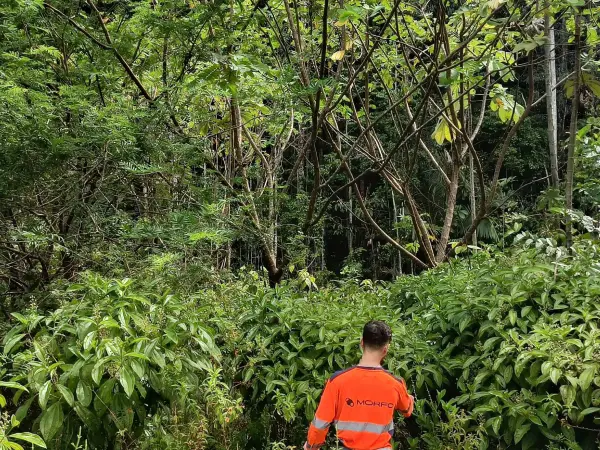
- invasive pressure reshaping the entire maintenance plan.
What changed in practice
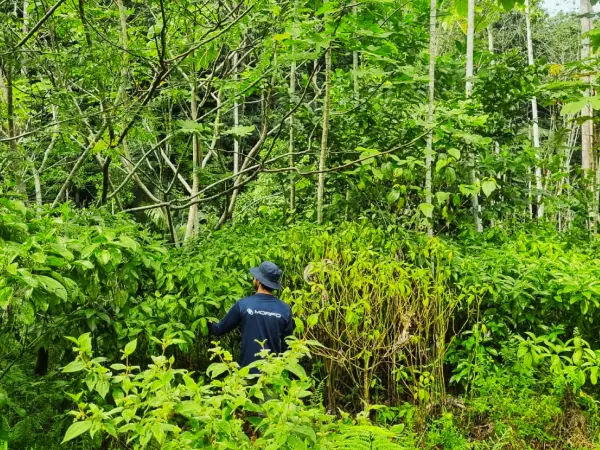
Diagnostics are treated as a decision gate, not a formality. Land is screened, tested, and qualified before the project becomes operationally locked.
A typical situation
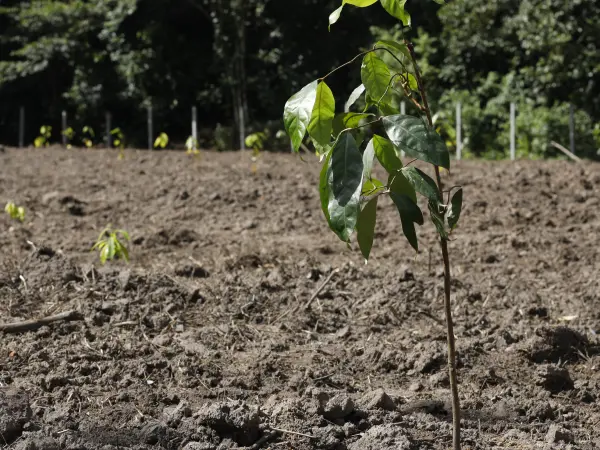
A client wants to plant quickly to “hit the season.” Early signals suggest that parts of the site will behave very differently. Instead of planting uniformly, MORFO pushes to complete qualification first, then excludes or rescopes weaker zones and adjusts methods and densities elsewhere.
The start is slower, the project is more stable and the emergency corrections later are reduced.
This is the first kind of “no” that protects the entire project.
Boundary #2: no fully fixed designs at the start
What we refuse
Locking every detail of a project upfront: densities, species mixes, and methods frozen before field reality and early monitoring can validate assumptions.
Why this matters
Fixed designs simplify contracts and presentations. Field conditions do not follow slides.
At scale, deviations appear quickly:
- rainfall timing alters establishment dynamics,
- species respond differently to soil conditions,
- logistics and access reshape execution,
- maintenance capacity becomes the real constraint.
What we do instead
Early designs are explicitly adjustable. Adaptation is built into the project logic, not treated as an exception.
Monitoring then supports decisions during establishment, rather than explaining outcomes afterward.
Boundary #3: restraint in methods and tools
What we refuse
Betting the entire project on a single planting method or accumulating tools that do not integrate into operations.
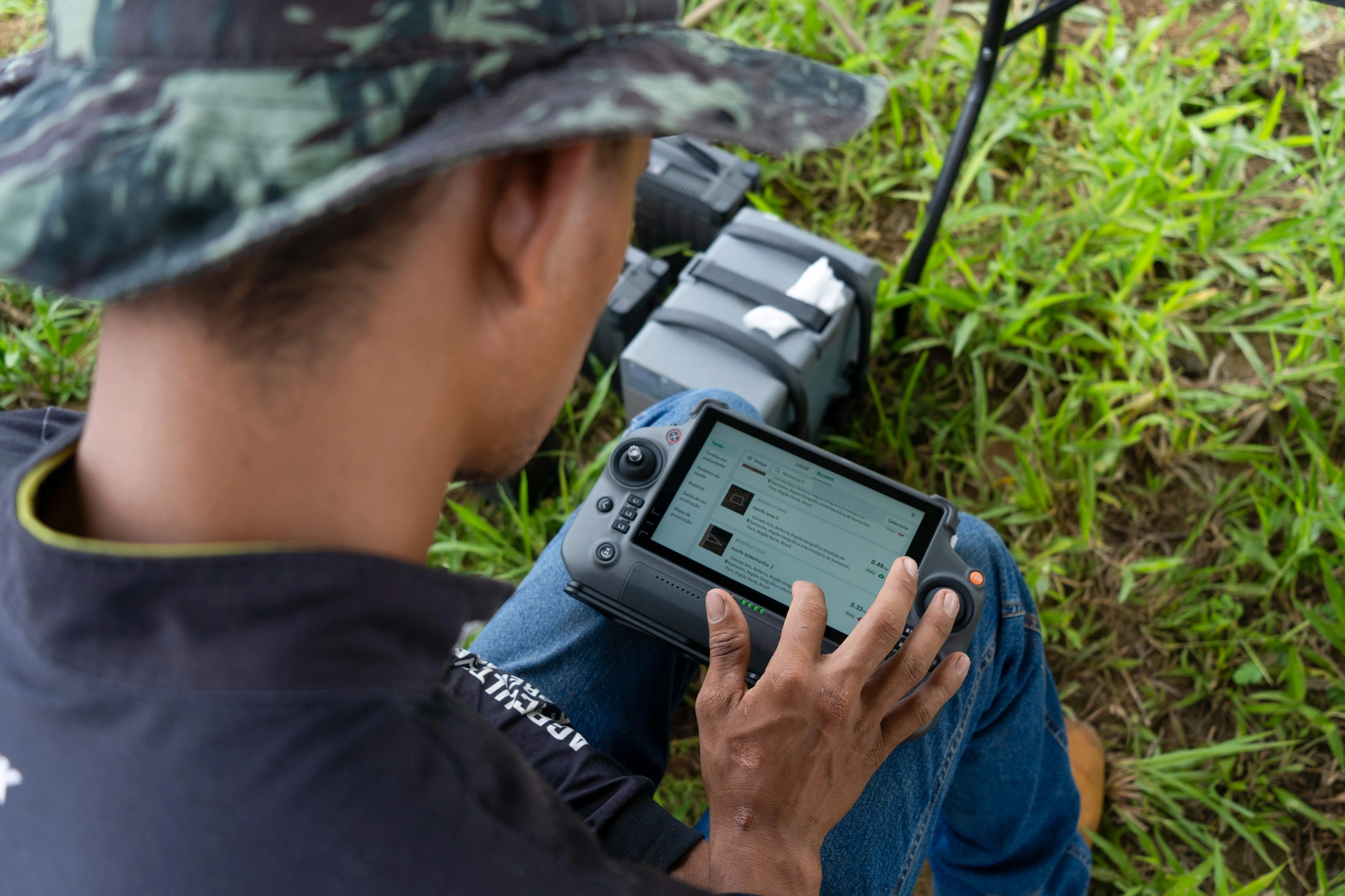
Different contexts demand different approaches. Deployment choices are based on slope, soil, access, and maintenance implications, not ideology.
A field-driven trade-off
In Brazil, a recurring operational question is whether to plant in lines or across the full area. If soil preparation is imperfect, invasive grasses can quickly dominate, driving maintenance costs up and establishment rates down.
In those cases, the debate is not about “the best method.” It is about choosing the option that keeps outcomes predictable under real constraints.
Restraint here is not conservative, it is operational.
What saying no makes possible
These boundaries did not emerge from theory. They emerged from projects where early decisions had long-lasting effects.
Saying no reduced the number of variables introduced too early, preserved options when uncertainty was highest and made monitoring actionable rather than retrospective.
At scale, MORFO’s “no” protects three things that matter most:
- outcomes, by reducing avoidable early risk,
- budgets, by limiting costly late corrections,
- credibility, by building projects on qualification rather than optimism.
As restoration attracts more capital and attention, the temptation is to accelerate, standardize, and promise more.
Experience suggests another sequence:
- qualification before commitment
- evidence before narratives
- adaptation before rigidity
Scaling restoration is not only about learning what to do.
It is about learning when to say no, early enough for it to matter.