What early monitoring changes in forest restoration projects: lessons from site visits in Belém
Quentin Franque · 2025-12-21 · 4 minutes
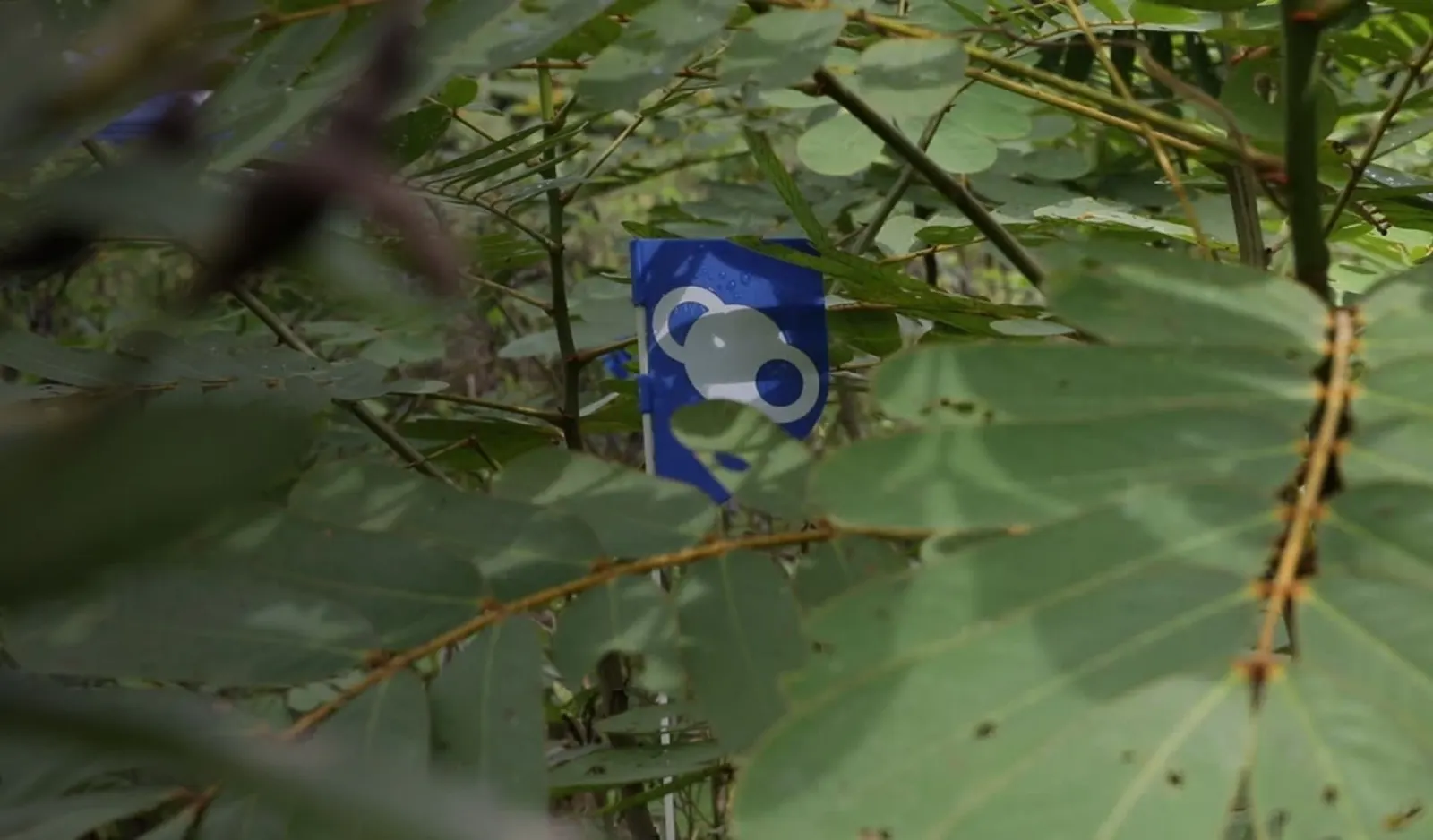
At a global level, expectations around forest restoration have evolved. Projects now involve larger areas, more complex financing structures, and higher levels of scrutiny. Restoration is increasingly assessed on its ability to produce traceable and verifiable outcomes over time. During COP30, MORFO opened a restoration site in Belém to explore how early monitoring shapes restoration projects during their initial establishment phase.
If you were not in Belém, this article provides a clear and factual overview of what was shown on site, what was measured, and what was discussed. If you did visit, it offers a structured digest of what you saw, in a format that can be shared with colleagues and teams who were not present.
The context of the Belém site
The site visited during COP30 was established on former pastureland affected by long-term cattle use. Before intervention, the area presented compacted soil, low organic matter, and dominance of invasive grasses.
Planting took place five months before the event, following a diagnostic phase combining satellite imagery, drone surveys, and on-site soil analyses. Species selection was guided by soil characteristics and climate projection models rather than by a predefined planting recipe.
At the time of the visits:
- the site was five months old
- early vegetation cover was visible across most of the hectare
- 18 native species had already been identified among established seedlings
- monitoring was producing spatialized data at hectare scale
Over the two weeks of COP30, 983 leaders visited the site in small groups, often accompanied by field teams and scientists.
How early monitoring was used on site
From the first months after planting, monitoring data was used to support operational decisions on the site.
High-resolution drone imagery covered the entire hectare. From this imagery, AI models identified and mapped individual seedlings. On this site, more than 4,000 seedling were detected and spatialized on our one hectare site.
These detections provided information on distribution patterns, density variations between zones, and early establishment dynamics.
Bioacoustic sensors installed on site recorded avian activity. During the monitoring period, 106 bird species were identified. For visitors, this data complemented vegetation observations by providing early biodiversity indicators.
During site walks, field teams referred to these datasets to explain how management decisions were being adjusted:
- identification of zones with lower establishment density
- detection of areas where invasive pressure required targeted intervention
- confirmation of zones where natural regeneration exceeded initial projections
Monitoring was presented as a way to document and follow trajectories during the establishment phase.
What you could observe during site walks
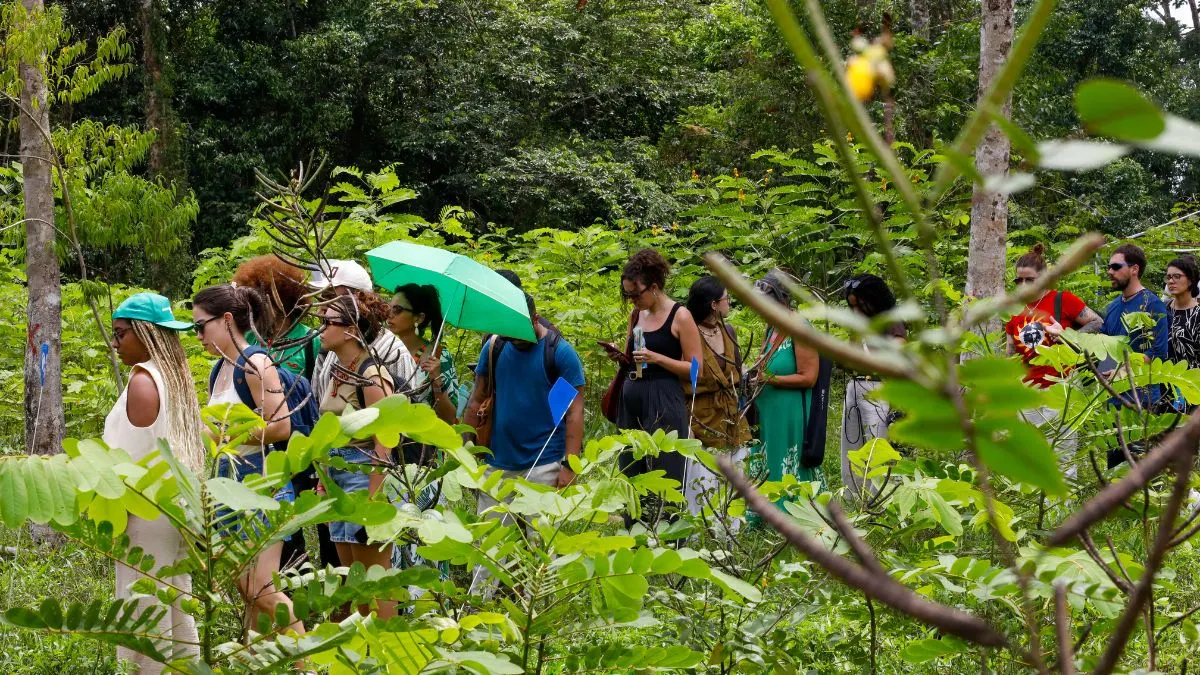 Forest Restoration Experience - COP30, Belém
Walking the site made several aspects tangible. First, heterogeneity was visible at short spatial scales. Soil texture, moisture levels, and vegetation cover varied significantly within the hectare. These variations explained differences in establishment patterns between zones.
Second, early growth profiles differed according to objectives defined during the diagnostic phase. Some zones emphasized density, others heterogeneity, depending on soil conditions and long-term ecological targets. These patterns were observable both on the ground and in drone imagery.
Third, maintenance and corrective actions were already scheduled and, in some cases, underway. These actions followed predefined thresholds linked to monitoring indicators and were part of the initial operational plan and, for many visitors, this clarified how early-stage restoration can present diverse visual outcomes within the same site.
Technology partnerships supporting early visibility
Several discussions during the visits focused on how early monitoring was made operational at scale. MORFO’s AI Suite, developed in partnership with Google through a multi-year collaboration, combined drone imagery, AI-based detection, and structured dashboards to produce consistent and comparable datasets over time.
The partnership with Google focused on data reliability, processing capacity, and scalability, allowing hectare-level monitoring without reliance on limited field sampling. During the visits, the emphasis remained on how these tools supported timely interpretation of field conditions.
Scientific governance and field validation
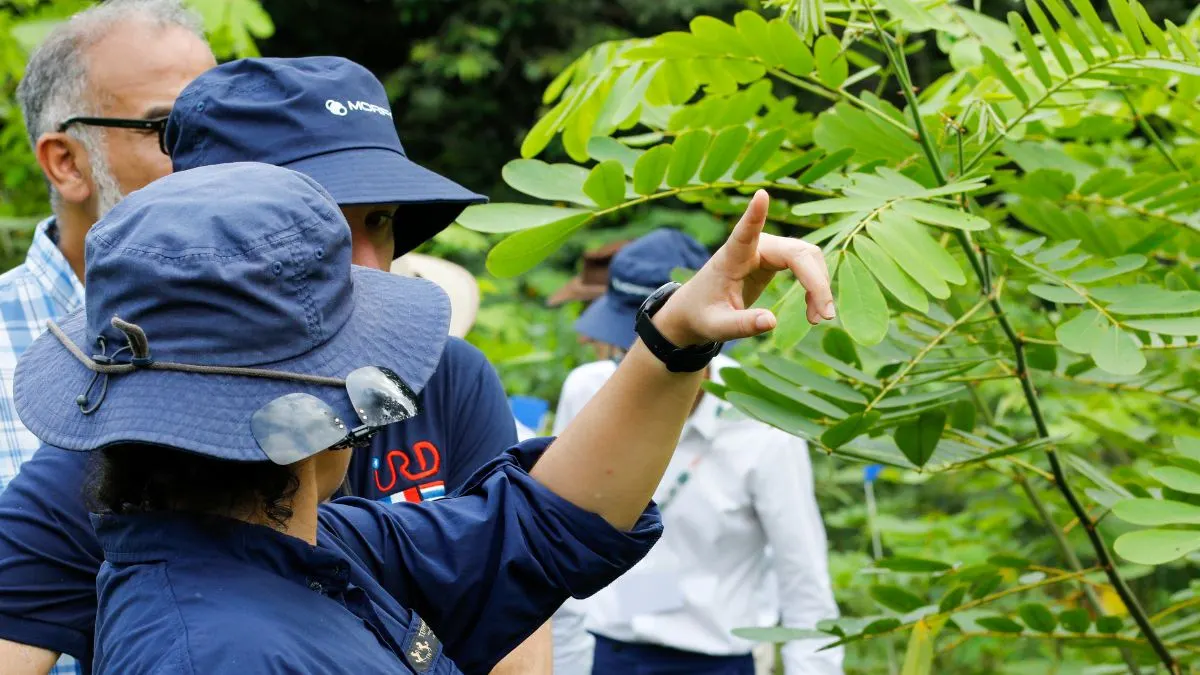 Forest Restoration Experience - COP30, Belém
The Belém site also reflected ongoing collaboration with scientific partners.
Partnerships referenced during the visits included work with Embrapa, UFV, UFSCar, and IRD. These institutions contributed to soil analysis protocols, species selection frameworks, and validation of monitoring methodologies. Scientific input informed field diagnostics, planting design, and interpretation of early monitoring data. It also supported the definition of indicators used to follow site evolution. For visitors, this provided context on how early monitoring data was interpreted within shared scientific references.
What early monitoring changed in practice
Across on-site discussions, a consistent observation emerged: early monitoring did not eliminate uncertainty but made it observable earlier in the project timeline. Rather than relying on consolidated results several years after planting, teams were able to observe establishment dynamics within months, with spatialized data supporting decisions on where and how to intervene during the early phase. For many visitors, this repositioned monitoring as an operational input rather than a retrospective output.