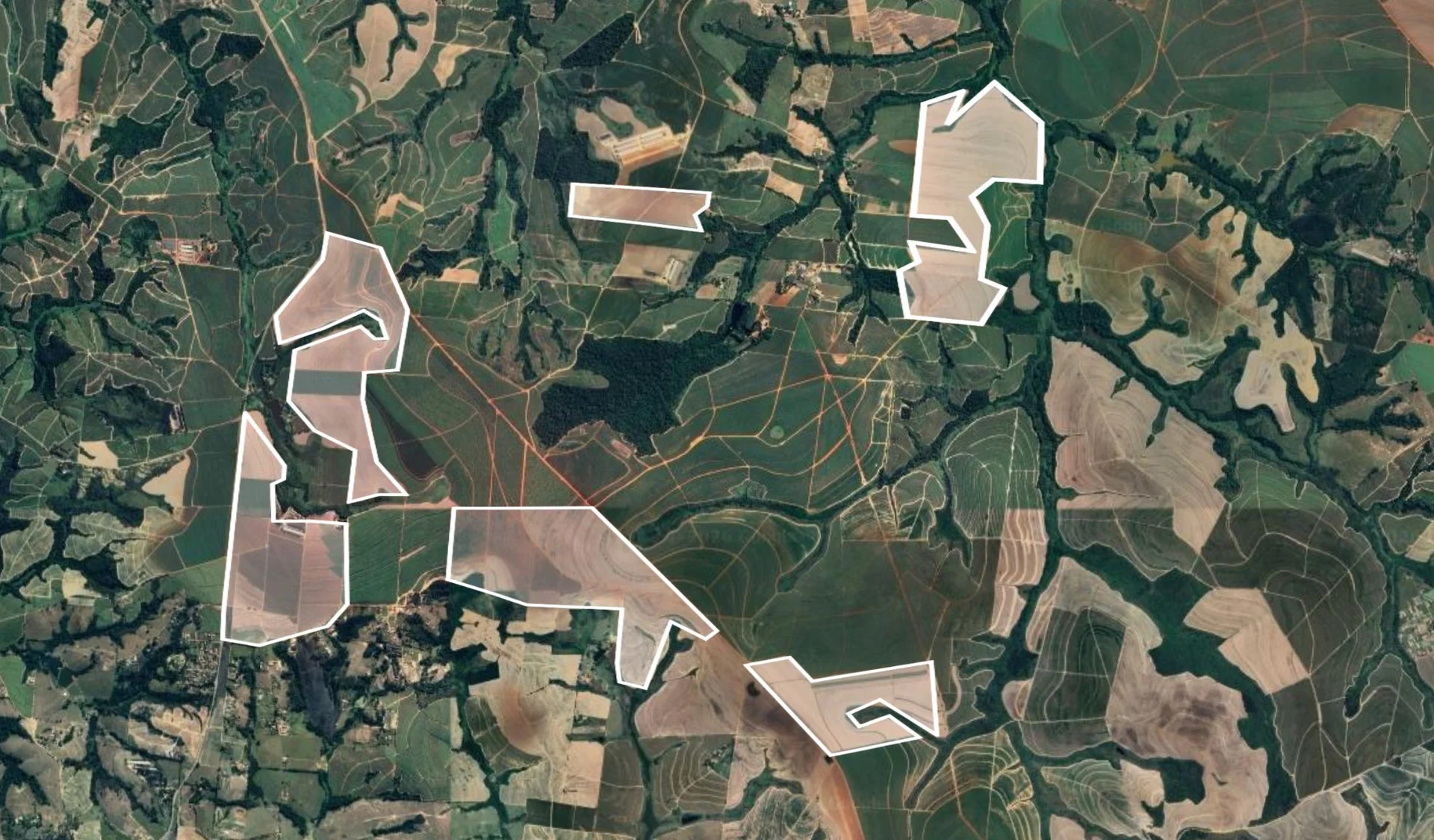

Managing one restoration area is a technical problem. Managing twenty is a governance problem.
At one site, you know the soil, the slope, the crew, the timeline. You can hold the entire project in your head. At twenty sites, spread across different properties, different stages, different biomes, different contractors, the problem is no longer "what do we do here?" It is "where are we losing ground, and how do I know before it is too late?"
What breaks at portfolio scale
The first thing that breaks is comparability. Each area generates its own data - soil analyses, progress reports, monitoring indicators, cost tracking. But unless that data follows the same structure, comparing site A to site B is guesswork. One site reports planting progress in hectares treated. Another reports it in percentage of total area. A third reports it in number of seedlings planted. All three numbers are correct. None of them can be compared.
The second thing that breaks is prioritization. When every site has its own issues, the portfolio manager faces a triage problem. Which delay is critical? Which issue will cascade into a missed planting window? Without standardized signals, the loudest problem wins - not the most important one.
The third thing that breaks is reporting. Investors want a portfolio view. Regulators want compliance evidence per site. Auditors want traceable data per zone. The board wants a summary. If that data lives in scattered PDFs, shapefiles, and spreadsheets, producing any of these reports becomes a multi-day exercise in data archaeology.
"The real problem is not the data. It is that nobody sees it in the same place. Each site has its own folder, its own format, its own person who understands it. When you manage twenty sites, that means twenty separate realities that nobody can compare." - Quentin Franque, CPO, MORFO
The Excel trap
Most portfolio managers start with what they know: spreadsheets. A master tracker with one row per site. It works at five sites. At fifteen, it becomes a full-time job to maintain. At twenty, it is already out of date by the time you finish updating it.
The problem is not Excel itself. It is that a spreadsheet cannot enforce data standards across sites. It cannot flag when a site has not reported in three weeks. It cannot show you that the velocity on zone Z2-W dropped 40% last week while the overall project average looked fine. It stores numbers. It does not store decisions.
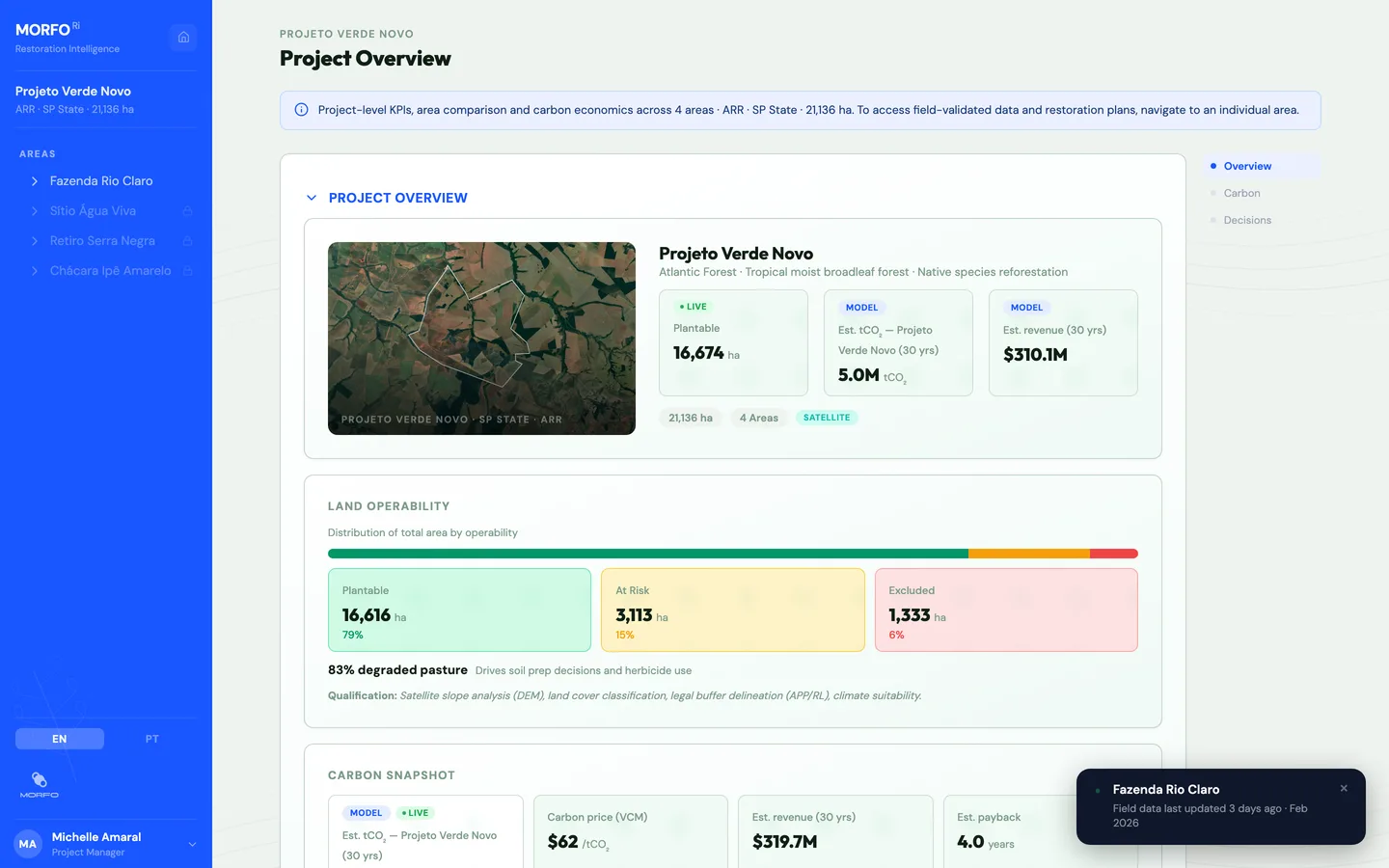
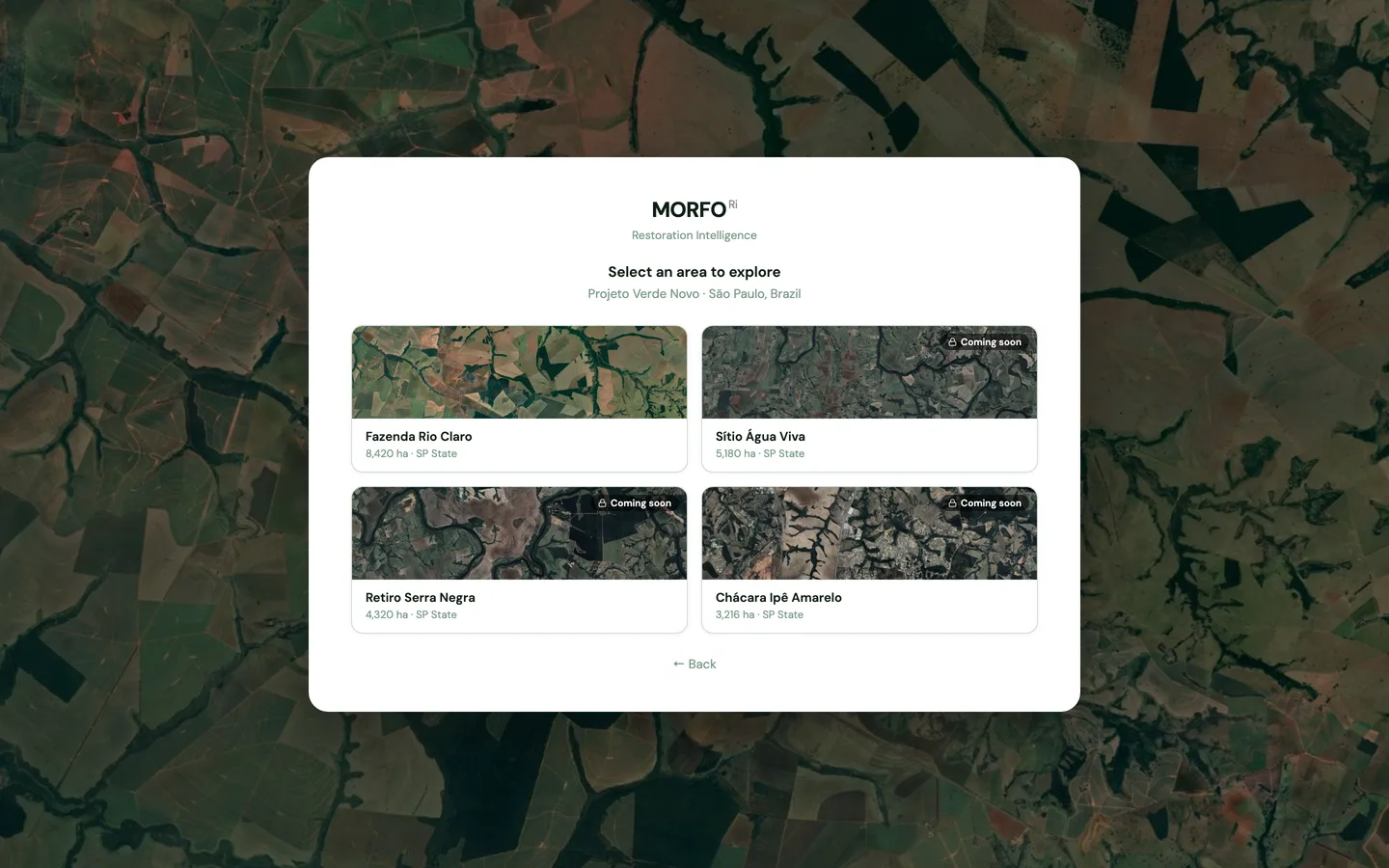
The same applies to Google Earth and GIS tools. They are excellent for spatial analysis. They are not designed to track operational progress, flag issues, compare sites, or produce investor reports.
What control actually means
Control at portfolio scale means knowing, at any given moment, the answers to five questions: Which areas are on schedule and which are behind? Where are the open issues, and which ones are critical path? Which sites are approaching their planting window? How does actual spending compare to planned budget? What evidence is ready for the next investor report or audit?
If answering any of these requires opening more than one system, calling more than one person, or waiting more than a few minutes, the portfolio is not under control. It is under the illusion of control.
"When you manage 20 areas, the problem is not the technique. It is governance. Who sees what, when, and in what format. If that is not standardized, you spend more time assembling data than making decisions." - Gregory Maitre, GM Brazil, MORFO
Each area has its own rhythm
A portfolio is not twenty copies of the same project. Each area is at a different stage: one is in pre-analysis, another in soil preparation, a third is mid-planting, a fourth is in post-planting monitoring. Their timelines do not align. Their risk profiles differ.
The structure has to flex with the stage while maintaining comparability across the portfolio. Different metrics, same governance framework.
From scattered documents to structured decisions
The transition from document-based management to structured data management is the single biggest operational upgrade a restoration portfolio can make. Every data point carries a source. Every decision is traceable. Every progress update is structured, comparable, and exportable.
Twenty sites. Twenty different stages. One framework for decisions.
MORFO builds restoration intelligence for large-scale forest projects across three biomes in Brazil. 27,000+ hectares analyzed, 24 active projects, 1,900 hectares under management, 30 forest engineers and ecologists.
Request a site analysis or explore the platform at morfo.rest/restoration-intelligence