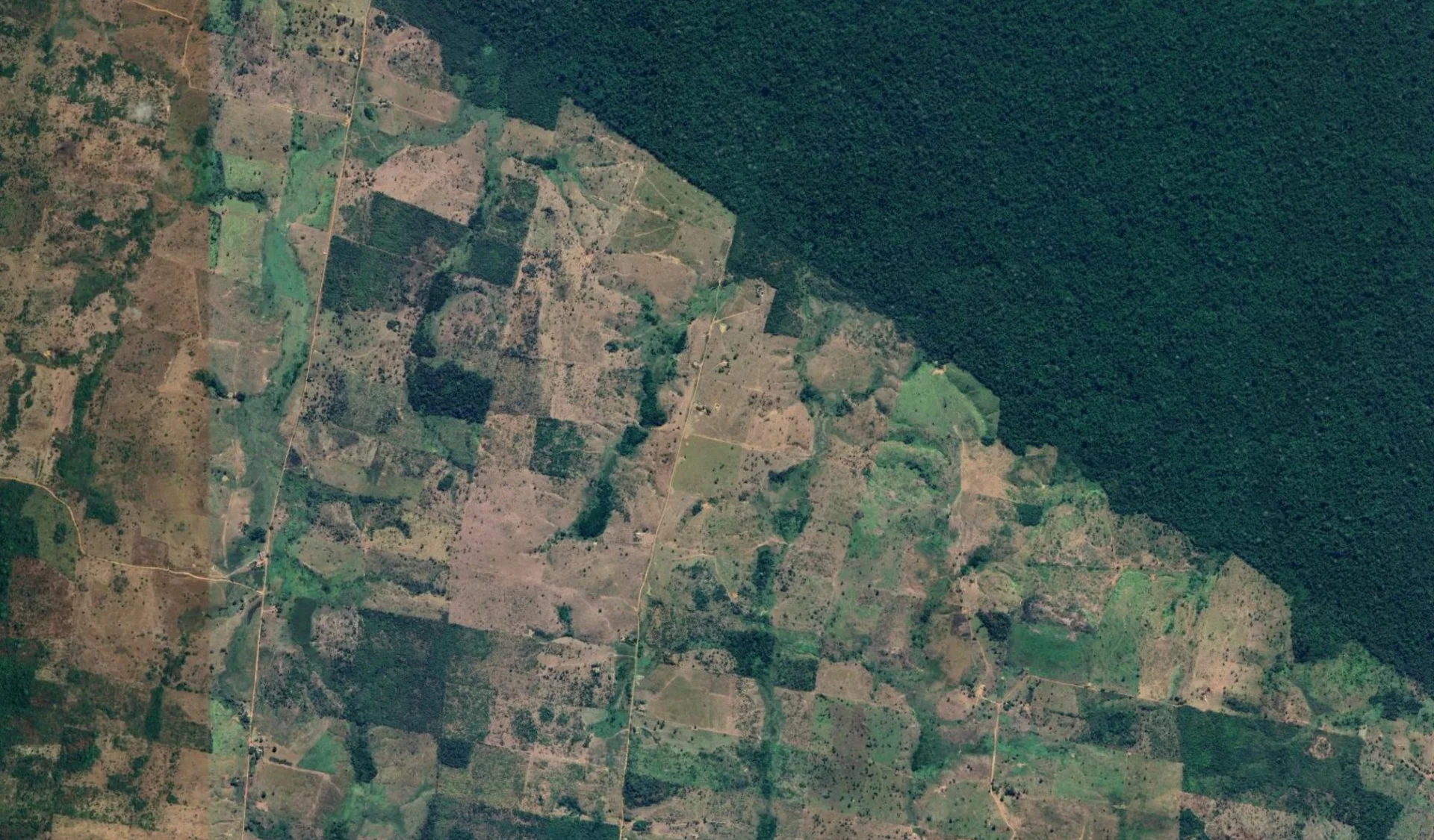

At 50 hectares, you can afford to use one method. At 5,000, you cannot.
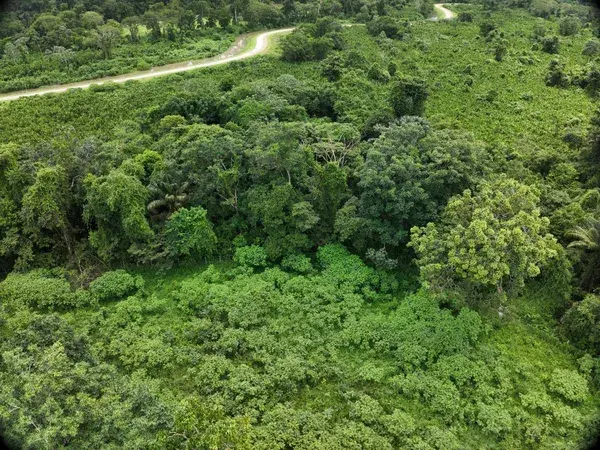
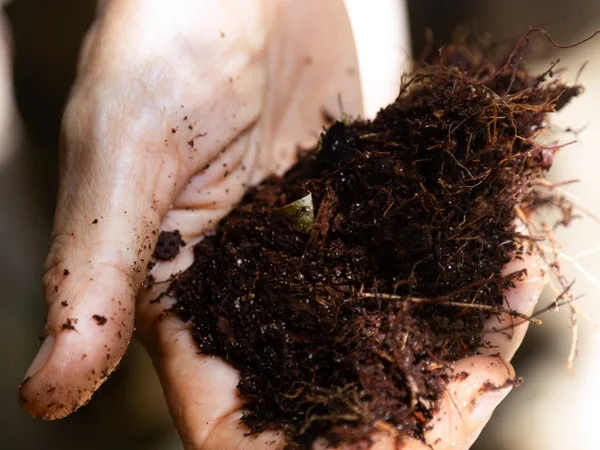
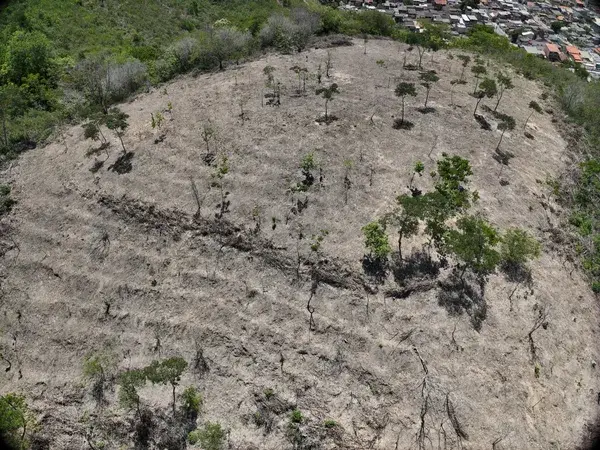
The difference is not just surface area. It is the number of distinct problems hiding inside the project boundary. Different soils, different slopes, different histories of land use, different levels of invasive species pressure, different distances from the nearest road. A planting method that performs well on a flat, well-prepared plateau will fail on a steep hillside with compacted laterite. And a method optimized for steep terrain will be absurdly expensive to deploy across 3,000 hectares of accessible flatland.
Scale does not multiply complexity linearly. It compounds it.
What changes above 1,000 hectares
Three things break simultaneously when a restoration project crosses the thousand-hectare threshold.
First, the terrain becomes heterogeneous. Below a few hundred hectares, it is possible that the soil, slope, and vegetation history are roughly uniform. Above a thousand, that is almost never the case.
Second, the logistics become a constraint of their own. Multiple crews operating in different zones need coordinated access, equipment staging, seed supply chains, and synchronized timelines. A two-week delay in vegetation clearing on one zone cascades into the soil preparation schedule of the next.
Third, the planting window compresses everything. In tropical regions, viable planting conditions may last seven to ten weeks. Every zone must be ready before that window opens. Miss it, and the entire zone waits a full year.
"People think scaling restoration is about doing more of the same thing. It's the opposite. It's about doing different things in different places, at the same time, without dropping anything." - Pedro Bevilaqua, Environmental Engineer, MORFO
The real trade-offs between methods
Every planting method exists for a reason, and every one has conditions where it fails.
Line seeding in furrows is the most resource-efficient method when soil preparation is complete. But it requires proper soil prep - if the ground is not adequately harrowed or subsoiled, seeds sit on compacted earth and germination drops.
Broadcast seeding covers large areas faster. The trade-off: it requires 20-30% more seed material to compensate for lower precision, and maintenance becomes harder because planted areas have no clear structure.
Manual planting of seedlings is necessary on steep slopes, riparian buffers, and areas where machinery cannot access. The cost per hectare is several times that of mechanized methods, and the pace is slow.
Nucleation and assisted natural regeneration apply where conditions allow nature to do most of the work. But it requires patience: the timeline stretches to years rather than months.
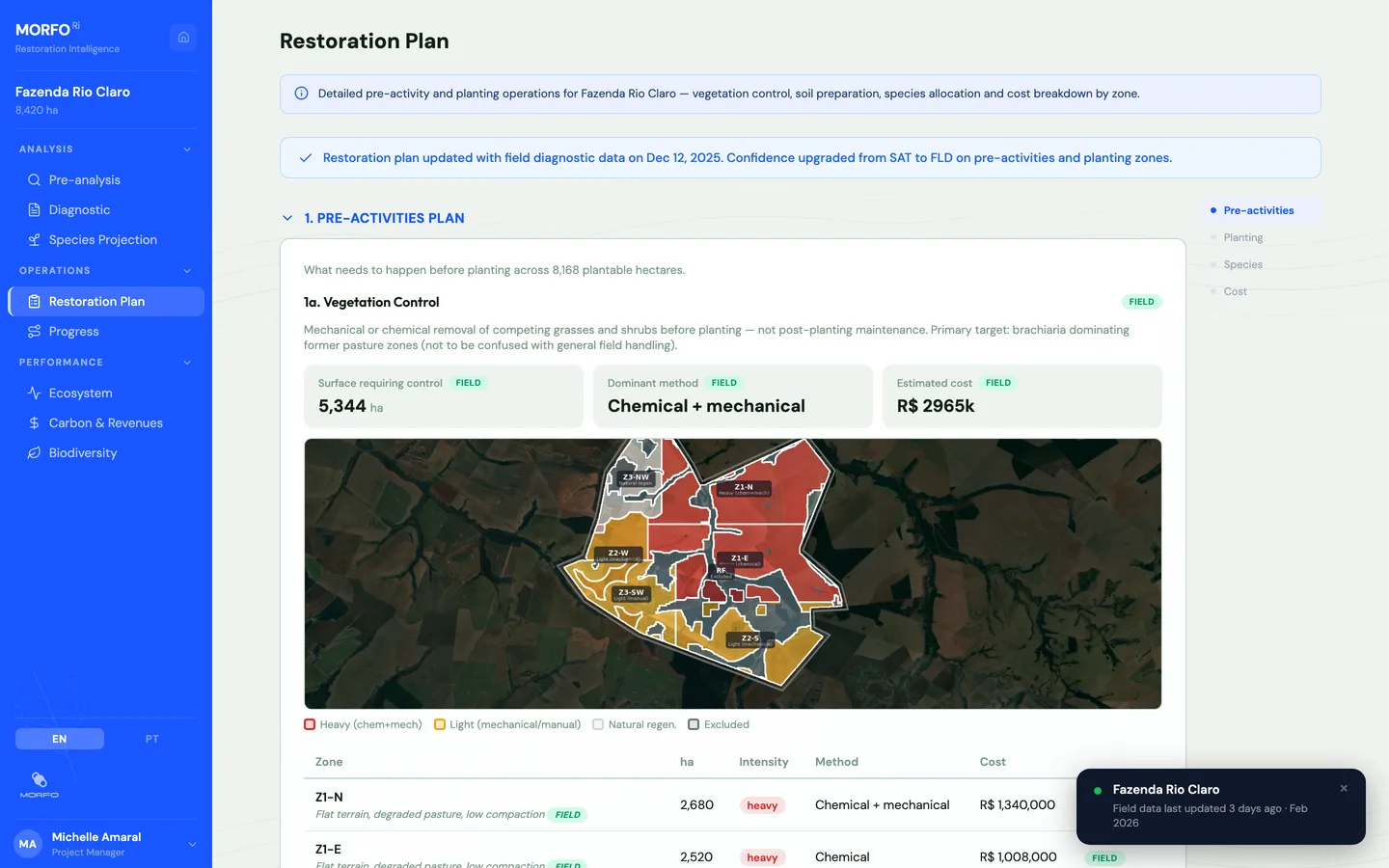
No single method covers all conditions. The skill is in knowing which method goes where, and being honest about the zones where no method will work without further preparation.
When saying no is the technical decision
One of the hardest calls in large-scale restoration is refusing to plant a zone that is not ready.
The pressure to plant is real. Timelines are set. Budgets are allocated. Stakeholders expect progress. But planting on unprepared soil is worse than not planting at all. Failed establishment means wasted seeds, wasted labor, and a zone that now needs to be re-treated before a second attempt.
"If the soil prep is not done right, every method will fail. It doesn't matter if you use drones, manual planting, or direct seeding. The ground has to be ready. And sometimes the honest answer is: this zone is not ready this season." - Hugo Asselin, Co-founder and CTO, MORFO
On one project, soil preparation on a 500-hectare zone was incomplete when the planting window opened. The team chose to defer. The zones that were planted that season achieved target density. The deferred zone was planted the following year with full preparation and matched those results.
The cost of deferral was one year. The cost of planting on unprepared soil would have been the same year plus the cost of re-treatment, re-seeding, and the reputational damage of a failed zone in the monitoring data.
Coordination at scale
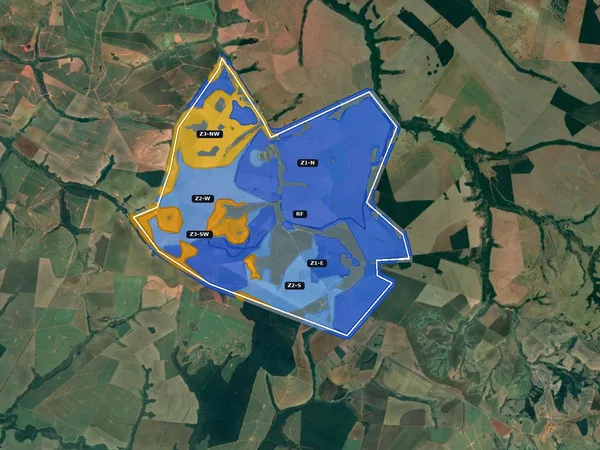
A 5,000-hectare project with five distinct zones and three planting methods requires a level of coordination that no spreadsheet can reliably sustain.
Each zone has its own preparation timeline, its own crew allocation, its own seed mix, its own equipment requirements, and its own monitoring protocol after planting.
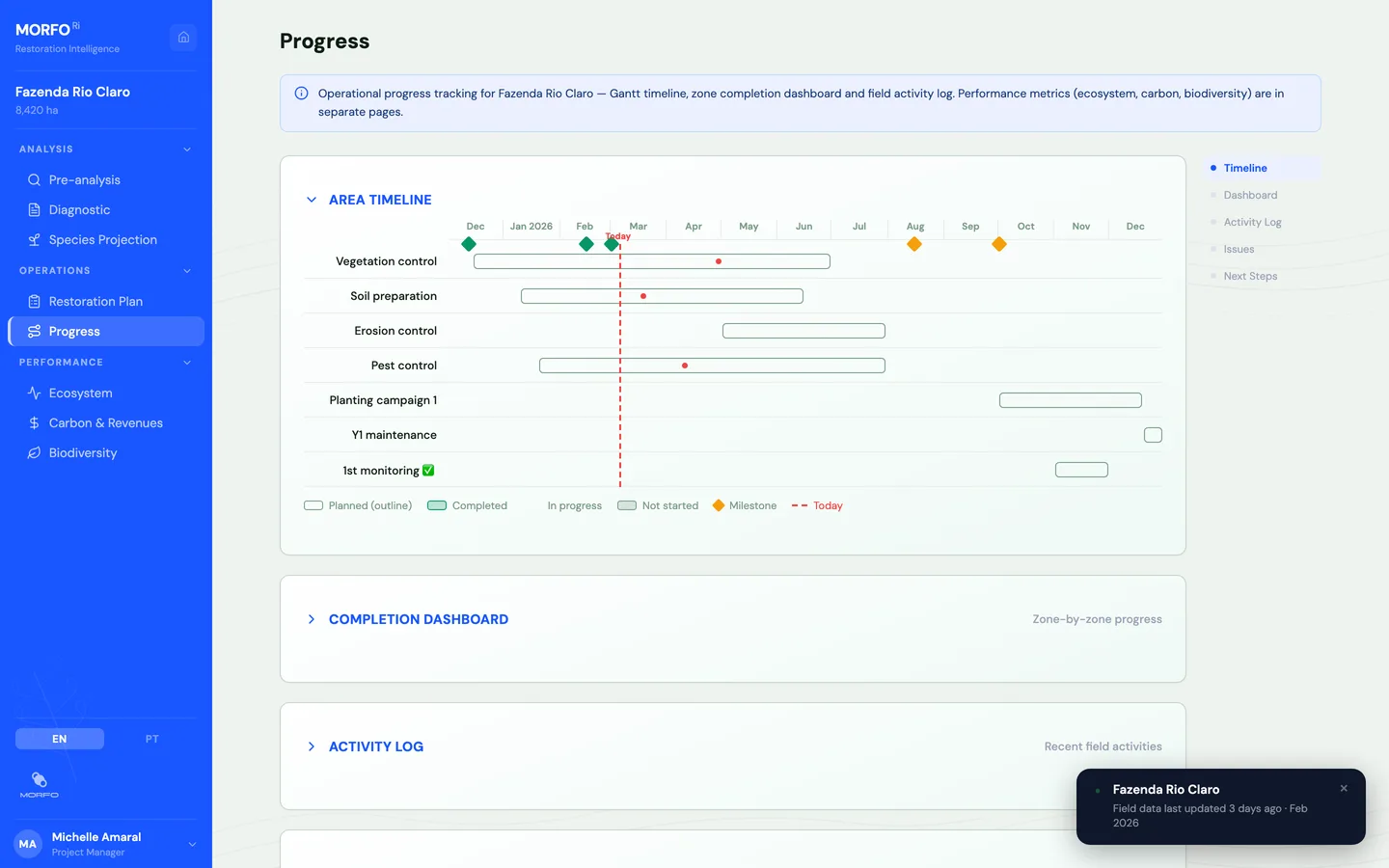
When one zone encounters an issue - equipment breakdown, unexpected rock layer, access road washed out - the ripple effect hits every downstream activity. The ability to see this cascade in real time, reprioritize zones, and reallocate resources is the difference between a project that stays on schedule and one that misses its planting window.
This is not a technology problem. It is a governance problem. The methods exist. The knowledge exists. What usually breaks at scale is the ability to orchestrate them across zones, crews, and timelines without losing track of what is actually happening on the ground.
MORFO builds restoration intelligence for large-scale forest projects across three biomes in Brazil. 27,000+ hectares analyzed, 24 active projects, 1,900 hectares under management, 30 forest engineers and ecologists.
Request a site analysis or explore the platform at morfo.rest/restoration-intelligence