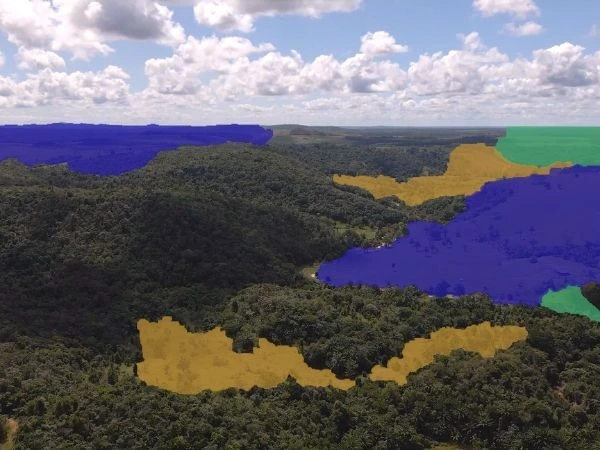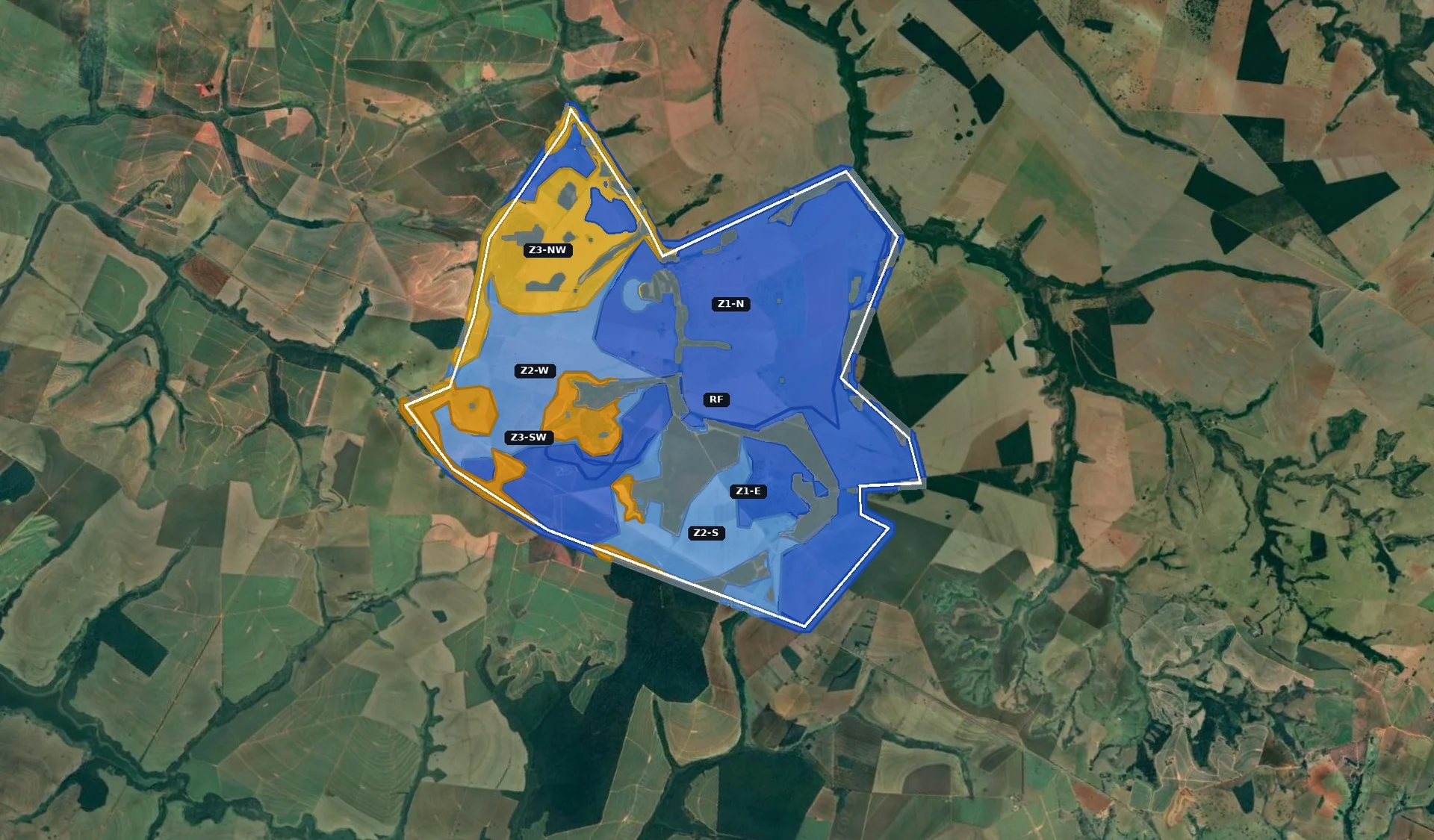

A 5,000-hectare site is not one restoration problem. It is seven different problems sharing a property line.
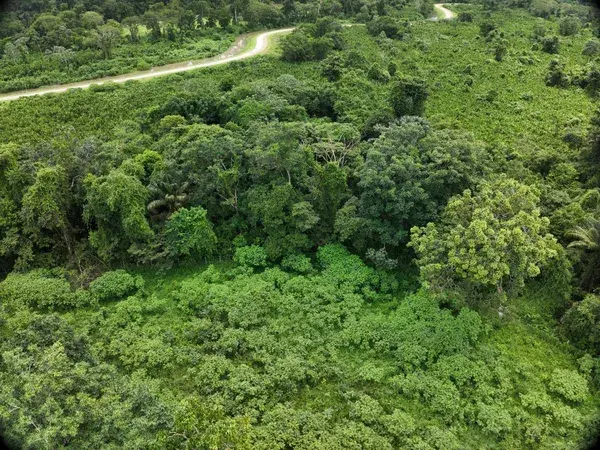
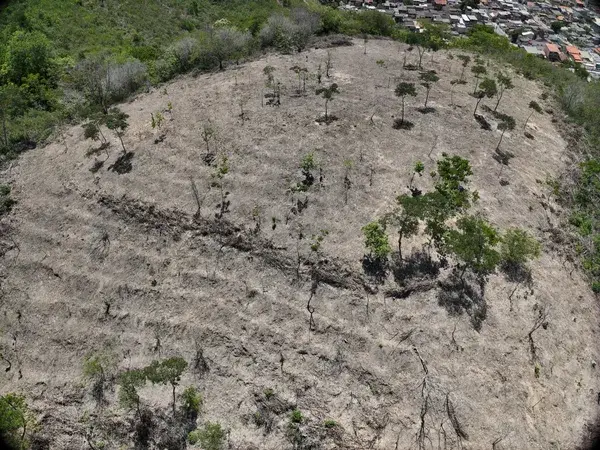
One zone sits on a sandy plateau with compacted soil from years of cattle grazing. Another occupies a steep hillside where machinery cannot operate. A third borders a river, legally protected and requiring a completely different approach. The elevation ranges 370 meters from bottom to top. Rainfall patterns shift between the northern and southern edges. And invasive grasses dominate some areas while fragments of native forest persist in others.
If you apply the same treatment everywhere, you will fail in most zones. The question is never "how do we restore this site?" but "how do we restore each part of this site, given what we actually know about the ground?"
The combinatorics of a restoration plan
For a single zone, a restoration engineer must choose among several vegetation control methods - mechanical clearing, selective herbicide, controlled burn. Then soil preparation: subsoiling, disk harrowing, or nothing at all, depending on compaction levels. Then planting method: line seeding in furrows, broadcast seeding, manual planting of seedlings, nucleation, or assisted natural regeneration. Then species composition: a mix of pioneers, secondary growth species, climax trees, and green manure cover crops, chosen for the specific soil and climate of that zone.
Multiply these options across seven zones, each with its own soil profile, slope, access constraints, and invasive species pressure, and you are looking at thousands of theoretically valid combinations. The number of ways to get it wrong vastly exceeds the number of ways to get it right.
"You cannot design a restoration plan from a desk. You design it from soil samples, slope measurements, and species inventories. The terrain tells you its needs - but only if you listen to its heterogeneity." - Rebecca Montemagni Almeida, Senior Forest Ecosystem Engineer, MORFO
Why "the same everywhere" fails
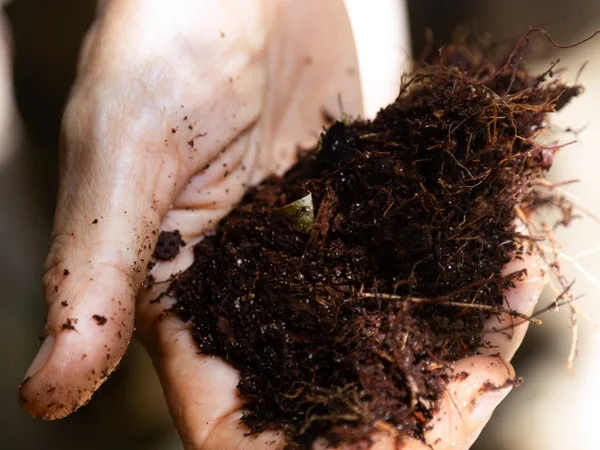
The most common failure mode in large-scale restoration is uniformity. A project applies mechanized seeding across the entire area because it is the most efficient method per hectare. But efficiency per hectare means nothing if 20% of the area has slopes above 30 degrees where machines cannot access, or if 15% has soil so compacted from decades of soybean monoculture that seeds cannot germinate without deep ripping first.
Consider soil preparation alone. On land that was used for grazing, four to five disk harrowings may be necessary to break the root mat of invasive grasses. On former cropland, one pass may suffice. That difference alone changes the cost per hectare by a factor of three to four, and changes the timeline by weeks.

The planting method depends on the soil prep. Line seeding in furrows is the most efficient method when the ground has been properly prepared - it uses fewer seeds and concentrates resources. But on rough terrain or partially prepared soil, broadcast seeding may be the only option, and it requires 20-30% more seed material to achieve the same establishment density. On steep slopes, manual planting of seedlings in individual pits becomes the only viable approach, at a cost several times higher.
How decisions are made
The prescription for each zone is a function of at least five variables: soil condition (type, compaction, pH, organic matter), slope and terrain (gradient, mechanization access), invasive species pressure (type, coverage, root depth), access logistics (distance to roads, equipment staging), and planting window constraints (when soil prep must be finished relative to the rainy season).
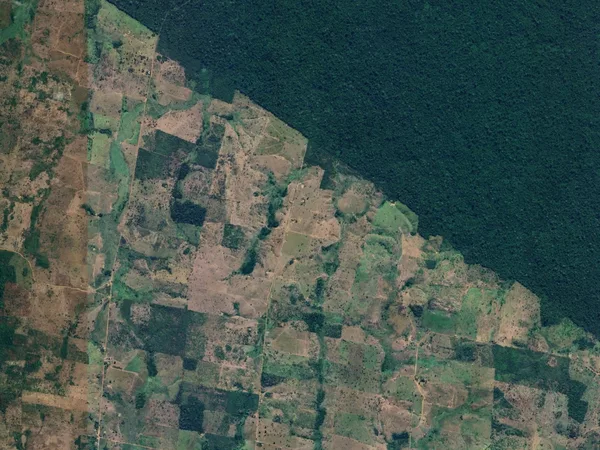
No single data source answers all of them. Satellite imagery shows slopes, vegetation cover, and fire history, but cannot tell you the pH of the soil or whether the ground is compacted at 30cm depth. Drone orthophotos give centimeter-resolution maps but are expensive and capture a single moment. Field surveys deliver the ground truth - soil chemistry, species identification, penetrometer readings - but are slow and cover only sample points. Models project climate trajectories and carbon outcomes but rest on assumptions that field data must validate.
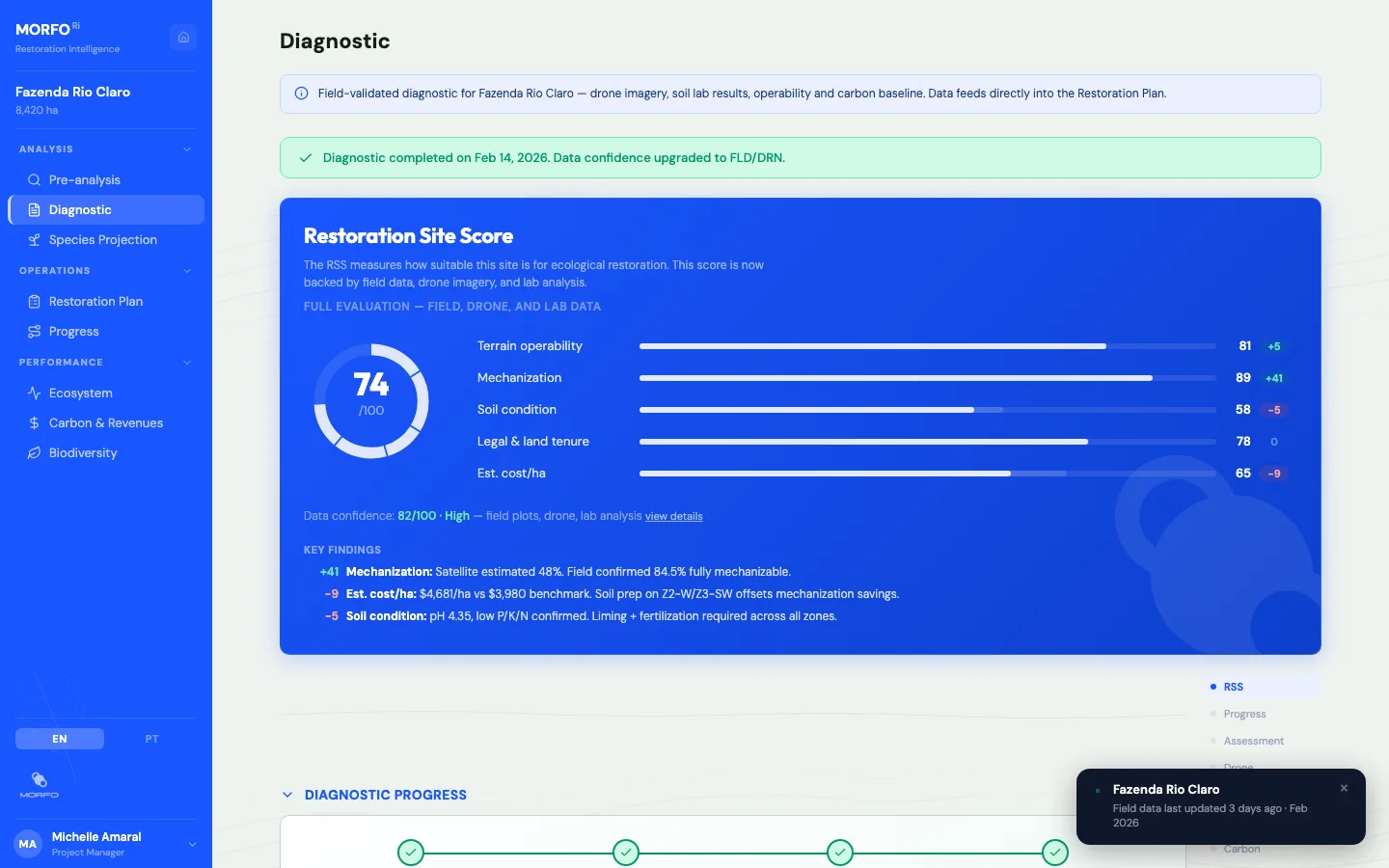
The diagnostic comes first. Always.
"On 24 projects across three biomes in Brazil, we have learned that the biggest risk is not choosing the wrong method - it is starting before you understand the terrain. When uncertainty is high, saying no is often the most technical decision you can make." - Hugo Asselin, Co-founder and CTO, MORFO
MORFO does not accept projects in areas without sufficient soil preparation. If the diagnostic shows conditions that cannot support the planned intervention, the timeline shifts - even if it means losing an entire planting season. A season lost to proper diagnosis costs far less than a failed planting across thousands of hectares.
From complexity to execution
The result of this process is not a single master plan but a set of zone-level prescriptions, each with its own treatment strategy, species mix, planting method, soil preparation requirements, timeline, and cost structure. A 5,000-hectare project stops being one overwhelming problem and becomes five, six, or eight manageable ones.
Each prescription carries a confidence level tied to the data sources behind it. Satellite-derived estimates are flagged as such. Field-validated measurements carry a different weight. Modeled projections are explicit about their assumptions. When an investor, an auditor, or a field team picks up the plan, they know exactly what is measured, what is estimated, and what remains uncertain.
The combinatorics are real. But they are not a reason for paralysis - they are a reason for discipline.
MORFO builds restoration intelligence for large-scale forest projects across three biomes in Brazil. 27,000+ hectares analyzed, 24 active projects, 1,900 hectares under management, 30 forest engineers and ecologists.
Request a site analysis or explore the platform at morfo.rest/restoration-intelligence