Make your land regeneration viable at every stage.
Four moments decide whether a regeneration project pays for itself.
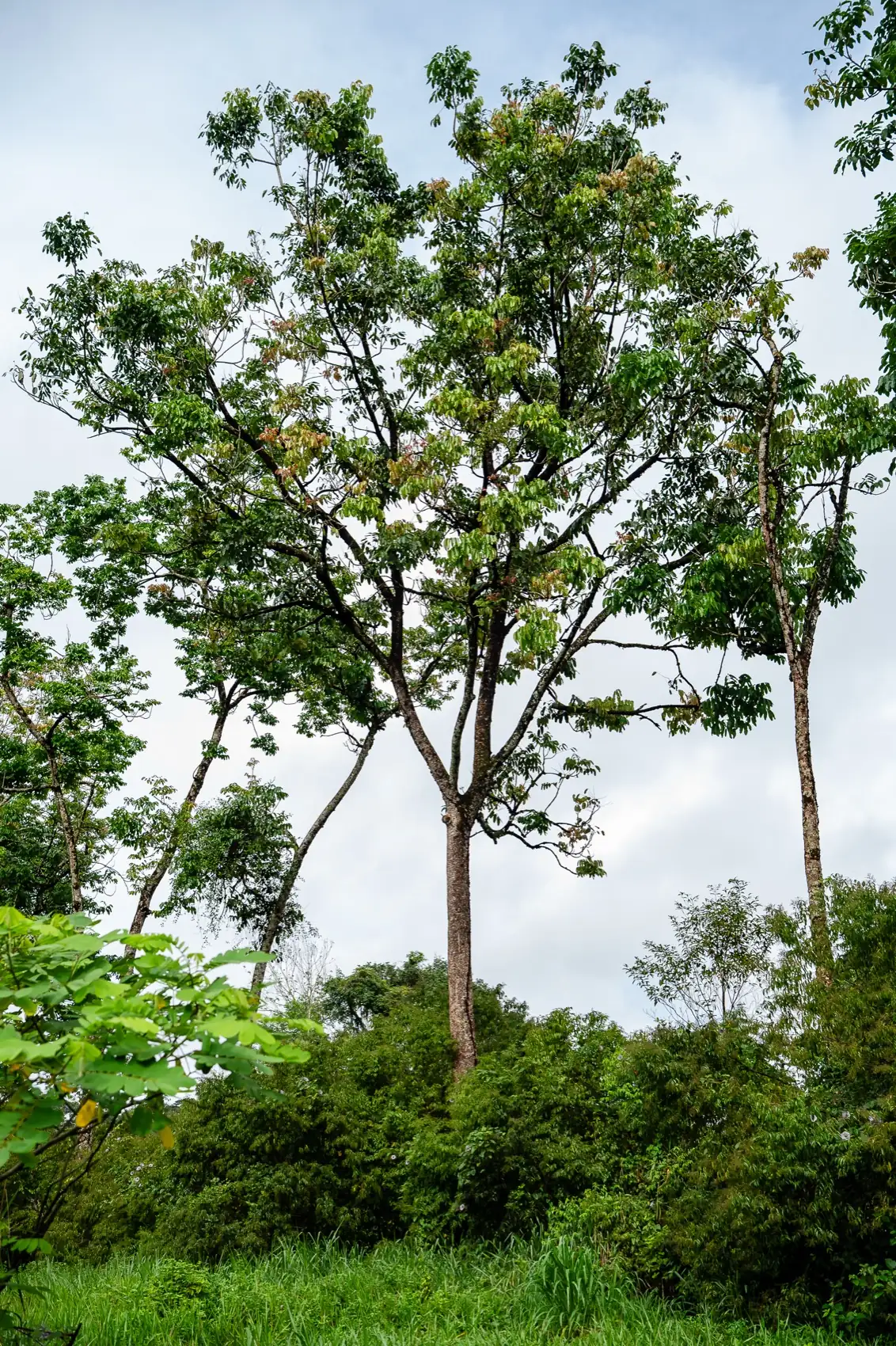

Assess
Measure the potential, the risk, the opportunity
See every factor on your land, from fire and soil to legal access and connectivity, scored and combined into one score per area.
Click an area for its score breakdown
Design
Get the right strategy for every area
Active restoration or assisted natural regeneration, tuned to your objective and to what each area can deliver at the best cost.
Method mix across the area
- Natural regeneration45%
- Assisted regeneration35%
- Targeted planting20%
Parcel A
Active restorationParcel B
Assisted natural regenerationParcel C
Mixed approachDeliver
Get the land regenerated, with your results guaranteed
We regenerate your land into living forest, and track the result until the targets are met.
Result guaranteed in the contract
We commit to ecological targets by contract. If a target is missed, corrective action is included, at no extra cost.
Parcel A
Live trackingProgress
38%
Survival
91%
Next check
M+12
Work with MORFO from read to result.
One accountable interlocutor, from the analysis to the guaranteed result.
MORFO builds its own analysis and coordinates the works on the ground. Holding both sides, the model and the field, is what makes a guarantee possible.
- 21 data layers on the latest version.
- The validated restoration-model library.
- The cost and carbon computation.
- The remote pre-analysis.
- Operator selection and coordination by biome.
- Calendar and quality control.
- Monitoring campaigns at each gate.
MORFO holds both sides, which is what makes a guarantee possible.
The field work runs through qualified local operators, selected and coordinated by MORFO and executing under MORFO's protocols. Handing off an execution step is normal in this sector; what matters is who answers for the result. MORFO answers for it, by contract, whoever does the manual work.
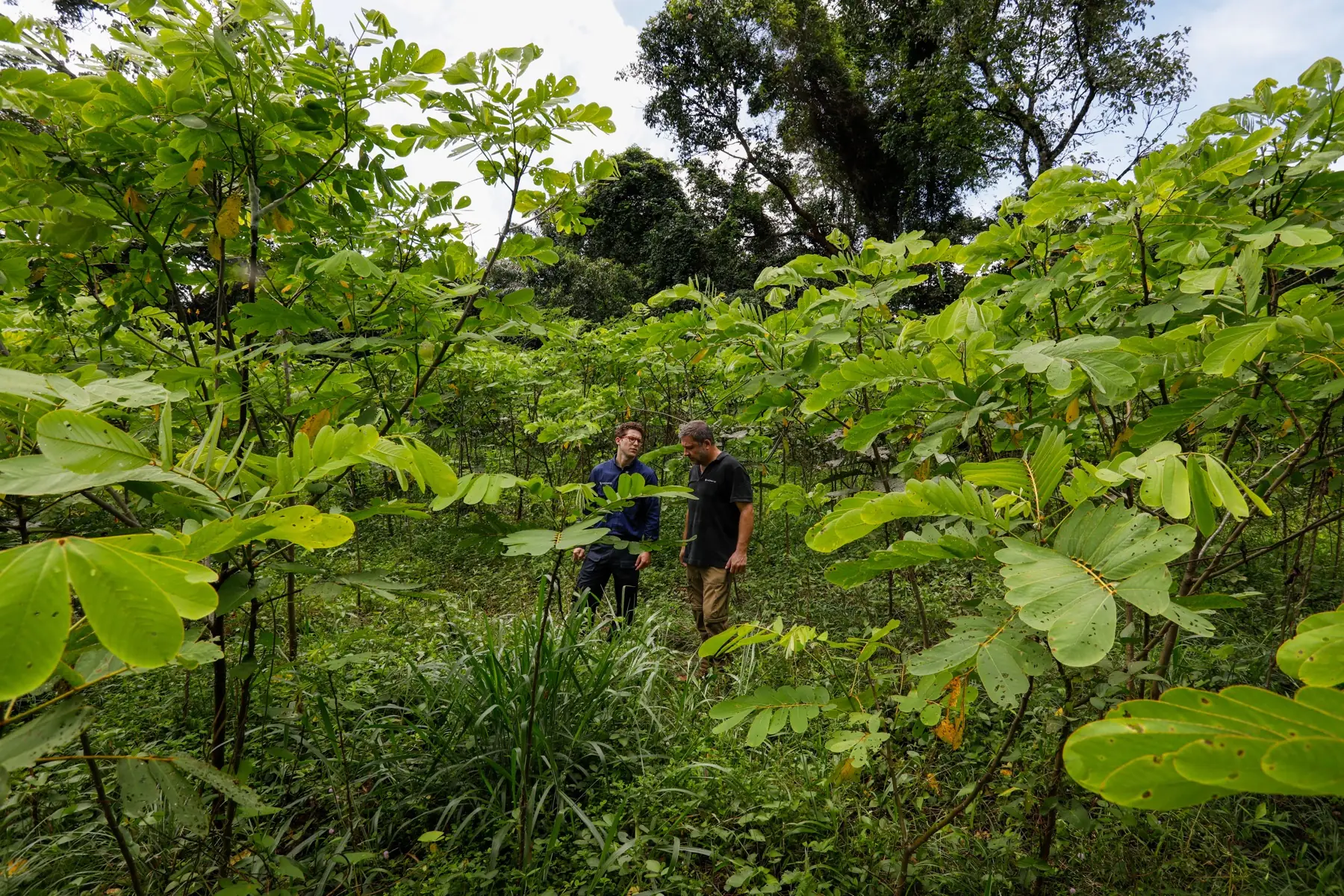
The method rests on field science.
Every plan rests on five years of field science: matched control plots, field measurement, and methods validated with Brazilian research institutions.
Built and tested with




Published, including in Restoration Ecology.
60,000+
hectares analysed
490
native species
130+
restoration protocols
2
patents
Sign the target into the contract.
If a target is missed, MORFO comes back and fixes it at its cost.
This is an operational commitment on the execution MORFO coordinates. It holds on the cases the contract covers.
What MORFO will never promise you.
Four things we refuse to say, and what we say instead.
We will not call it a forest.
Three years of growth is vegetation cover with a canopy forming, and a forest is decades away. So we report density per hectare, cover measured from imagery, and species counted in the field.
We will not give you a survival rate before we have read the land.
Survival depends on the soil, the invasive pressure and the rain that year. The target gets set after the analysis, written into the contract, with the date it is measured.
We will not sell you the cheapest quote.
The cheapest plan is usually the one that fails, and a failed planting is paid for twice. What we look for is the lowest-cost plan that still reaches the target you signed.
We will not certify our own results.
MORFO is not a certification body and not a verification platform. We produce field data an auditor can trace, from accredited laboratories, with dated and geolocated imagery.
See the rest
We will not lead with the drone.
It is one method among several, right on some areas and expensive on others. The choice comes from the field diagnostic, area by area, and assisted natural regeneration gets considered first.
We will not guarantee what we do not control.
The guarantee covers the work MORFO coordinates, against the targets in your contract, and it stops there.
We will not tell you what your land is worth.
Cost, physical output and the trajectory over time are ours to produce. Valuation and returns are yours to decide.
We will not promise a planting date outside the season.
Planting follows the rains, so a window missed in one year is a year lost. We say so rather than plant badly to hold a calendar.
Start with one area and a shapefile.
The first read comes back before any mobilization.
- 1
Send one area. A shapefile or a boundary is enough.
- 2
MORFO returns a remote read: what is worth planting, and what is not.
- 3
If the read holds, a costed plan follows, then the contract and the target.