El Niño 2026-27 and restoration: planning for next season and for 2100
Pascal Asselin · 2026-11-05 · 6 minutes
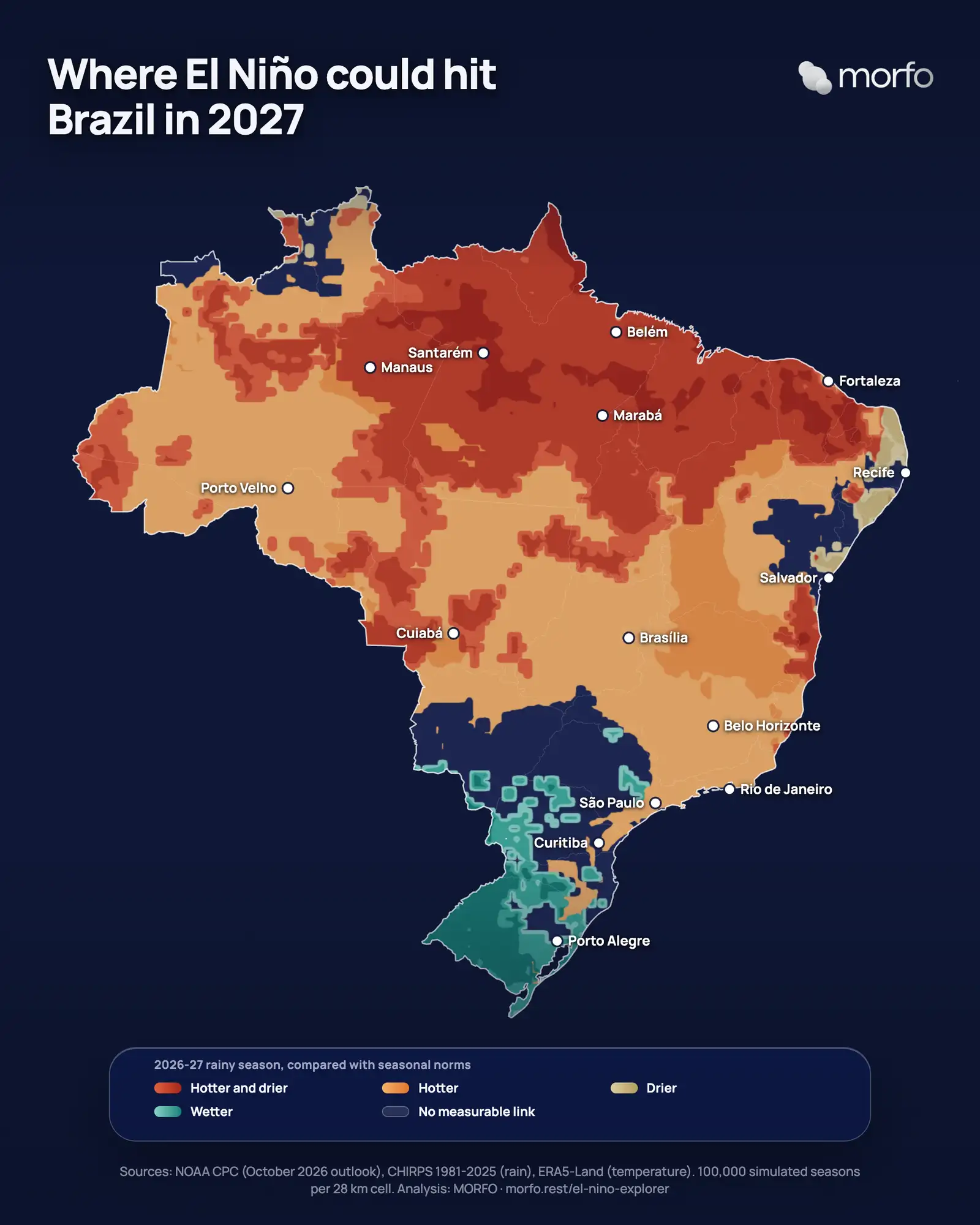
Brazil's 2026-27 planting season opened with one of the strongest El Niño events on record. NOAA gives a 100% chance of a very strong event from October to December 2026. Our analysis of Brazil shows that in Pará, 88% of the state is likely to have a rainy season that is hotter and drier at the same time. In 451 municipalities, the rains could settle two weeks or more later than usual.
A season like this one tests a habit that still runs through much of Brazilian restoration: the same species list and the same calendar, wherever and whenever the planting happens. Rebecca Montemagni, forest ecosystems engineer at MORFO, calls it a "receita de bolo", a cookie-cutter recipe. This article explains why we now plan every project against two horizons, the coming season and the end of the century, and what that changes in the field.
Two questions behind one planting decision
A restoration project has to stand up in two climates at once.
- The climate of the coming season decides whether seedlings survive their first months. It sets when to prepare the soil, when to plant and how much replanting to budget.
- The climate of the next decades decides whether the forest that grows is still suited to the place. It sets which species to plant.
The two questions use different data and different time scales. They end in the same decision: what goes into the ground, where and when.
The long horizon: which species will still stand in 2100
FaBRestor (Future-Based Approach to Restoration) is a framework published in Restoration Ecology by MORFO with co-authors from UFV, UFSCar, UFPR and the USDA Forest Service. It scores every candidate species against projected climate in 2040, 2070 and 2100, under three scenarios (SSP1, SSP3, SSP5), using MaxEnt models with bioclimatic and soil variables. We described the method in our article on planning forests for the future climate.
Some familiar choices come out as poor long-term bets. The ipê-amarelo-flor-de-algodão, a well-known native tree, shows low suitability across the Amazon region by 2100, even in the most optimistic scenario. A species that grows well today can still be the wrong choice for a forest meant to last.
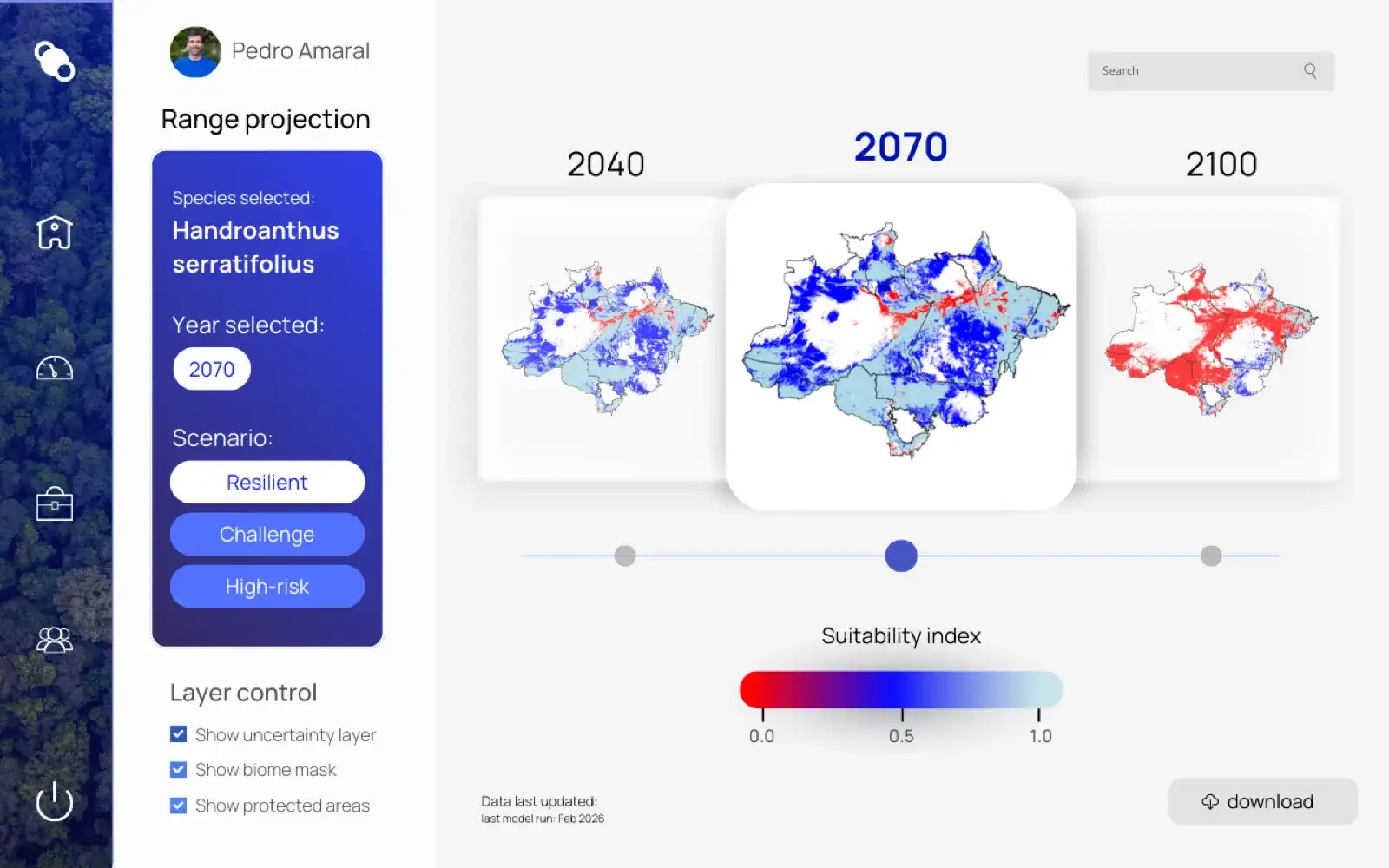
We already use the framework to select species on projects in the Amazon region and on the Atlantic coast.
The short horizon: when and how to plant this season
The El Niño Explorer answers the other question. For any place in Brazil, it shows how late the rains could start, how much warmer the season could run and which planting month is the riskiest. It divides the country into 11,763 cells of about 28 km and simulates the 2026-27 season 100,000 times per cell, from NOAA's 8 October outlook and 44 rainy seasons recorded since 1981.
The numbers can move a whole calendar. In Curuá, in Pará, the rains could settle about 74 days later than in a neutral year, and the useful planting window could shrink from about 154 days to 79. Every figure is the most likely value within a range, not a weather forecast.
What changes in the field
"Every operation we run is scheduled from the rainy period: what we do before planting and what we do after. If El Niño moves that period, everything has to move with it. In the north, plants will lose more water through the heat and receive less rain. That is where the planting window matters most." - Rebecca Montemagni, Forest Ecosystems Engineer, MORFO
In practice, our teams adjust in six ways:
- Reschedule the calendar. Soil preparation, planting and maintenance move around the new rain window, not around the date in the contract.
- Choose hardier species. Species that tolerate higher temperatures take a larger share of the mix where the season runs hot.
- Cool the soil. Green manure and mulch create a cooler micro-environment and hold moisture, which reduces evaporation where the heat is strongest.
- Buffer dry spells. Hydrogel applied at planting carries seedlings through short dry spells after planting.
- Plant stronger seedlings. Seedlings kept longer in the nursery are hardier when they go to the field.
- Budget the follow-up from the start. Monitoring and replanting are planned, with their costs, before the first seedling goes in.
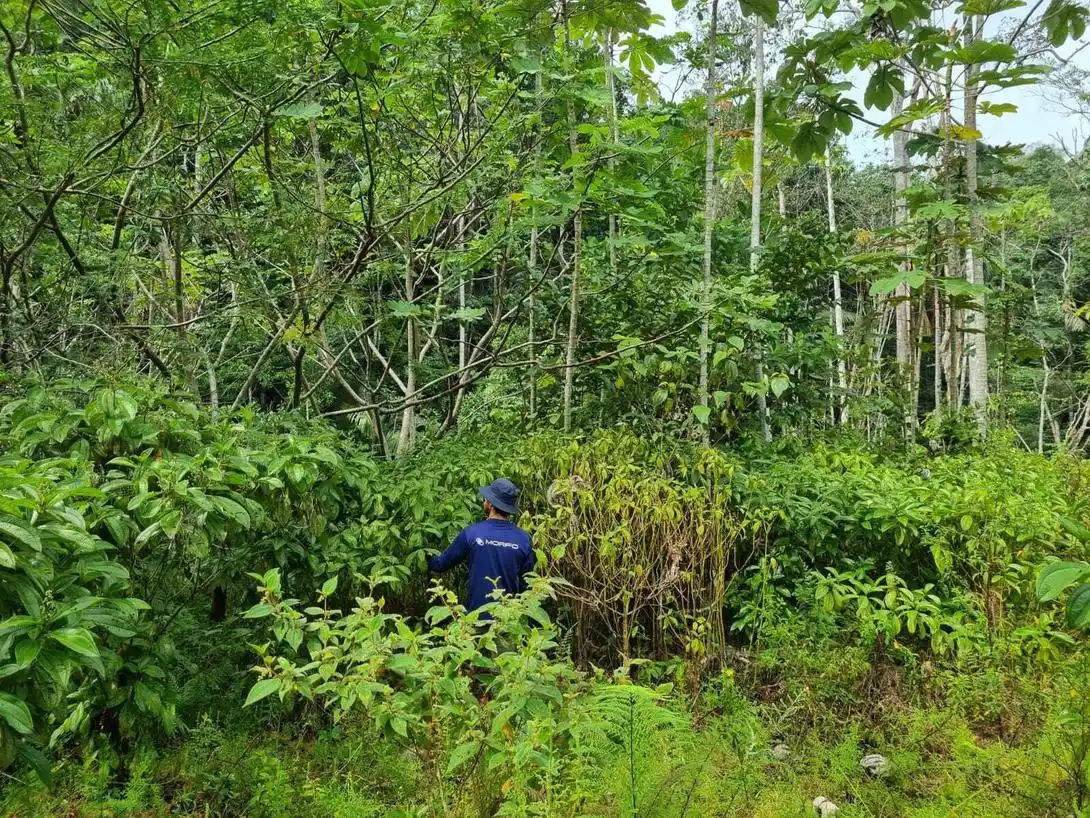
None of these adjustments is new on its own. What changes is that the data now says, place by place, which ones a given season calls for.
One plan, two time scales
The species list comes from the long horizon. The calendar and the field adjustments come from the short one. A project that only looks at 2100 can lose its first cohort to a late rainy season. A project that only looks at this season can plant a forest that will not suit its place in fifty years.
"A challenging season changes the way we plant. It does not change the decision to plant." - Grégory Maitre, CEO, MORFO Brasil
The difference between projects will show in their survival rates, and those are decided before planting: in the species chosen and in the date chosen.