Why the cost per hectare of native forest restoration changes after the site diagnostic
Luisa Ritzmann Peceniski · 2026-11-23 · 8 minutes
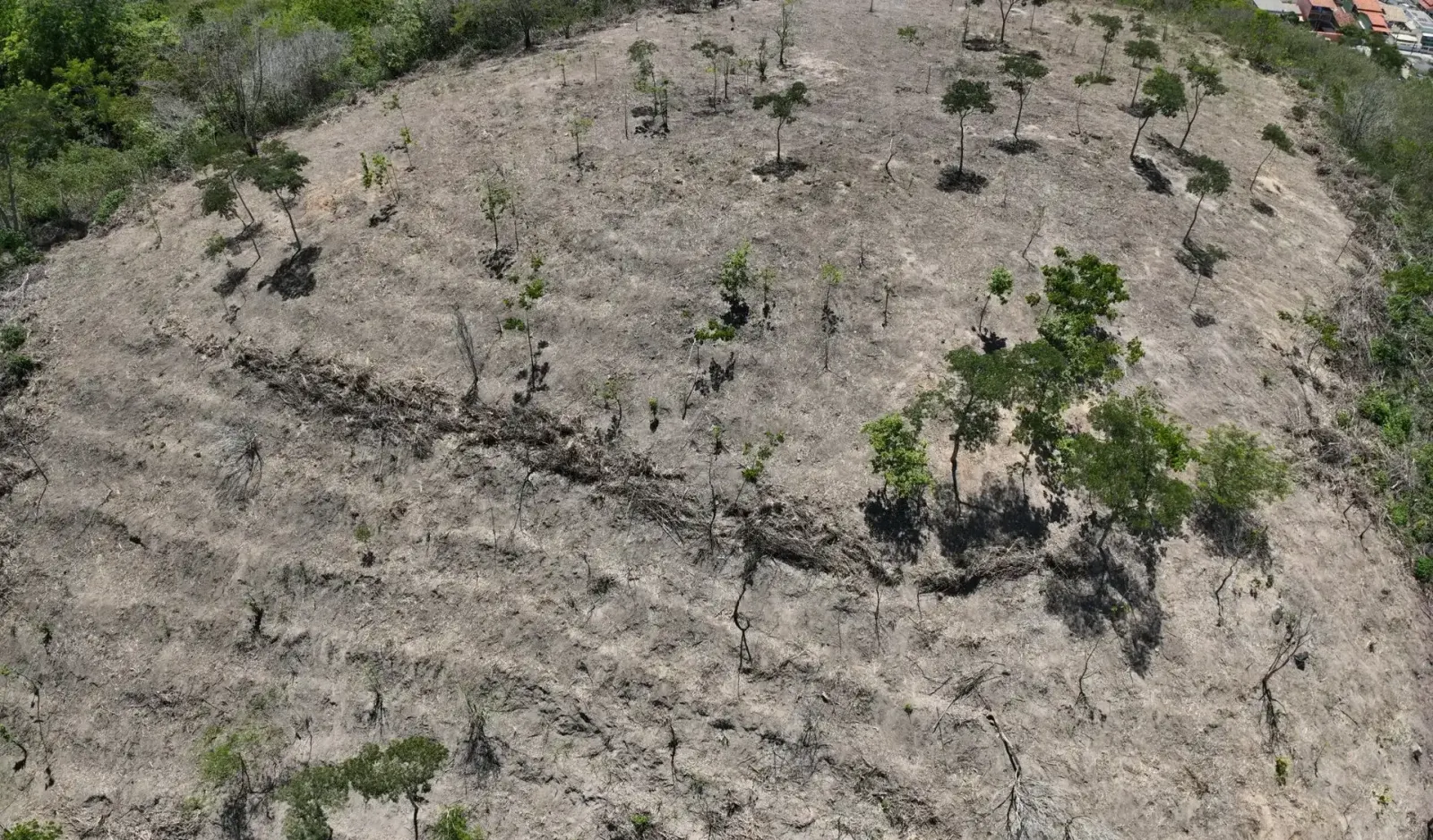
This page is for a company that has to restore native forest in Brazil, under a Legal Reserve deficit, an APP, a PRAD or a licence condition, and that is trying to put a number in its budget before it has chosen a contractor.
The short answer: there is no single cost per hectare for native forest restoration in Brazil, because each plot costs what its slope, soil, access, invasive grass and natural regrowth make it cost. A price given before the diagnostic is an average, and the site corrects it during execution. One way to buy that holds up is in two steps: a diagnostic first, then a price per plot built on written premises that both sides can check.
Why "how much per hectare" is the wrong first question
In the last week of October, two companies asked us the same first question: how much per hectare. In the same week, a consortium bidding on a large restoration tender received specifications where the fertiliser dose could be read anywhere from 100 to 1,000 kg per hectare across bids. I understand the question. A budget line needs a number. But a number given at that stage answers a different question: what does an average hectare cost, on land nobody has looked at yet.
The buyer's real question is what the whole area will cost until the agency accepts it. That total includes replanting, maintenance, the years of delay when a plot fails, and the hectares that never needed planting at all. None of these shows up in a price per hectare quoted from a desk.
What makes two hectares cost different amounts
On the same property, two hectares a few hundred metres apart can call for different work. These are the variables we read on every plot before costing it:
- Slope. A flat plot can be prepared and planted with machines. A steep one is worked by hand or from the air, with more erosion control.
- Soil. Compacted, acidic or sandy soil needs work before anything planted on it survives, and that work can weigh more than the planting itself. We wrote about this in soil is the forgotten variable in restoration economics.
- Access. Distance to a road, river crossings and the state of tracks in the wet season set the logistics cost of every input and every visit.
- Invasive grass. Brachiaria or other exotic grass decides how many maintenance rounds the plot will need in its first two years.
- Natural regrowth. A plot with a bank of native seedlings and a forest fragment nearby may need protection and enrichment only. A plot of bare degraded pasture needs full planting.
Each of these is visible from imagery and a field visit, and each one moves the cost of a plot more than any difference in seedling price.
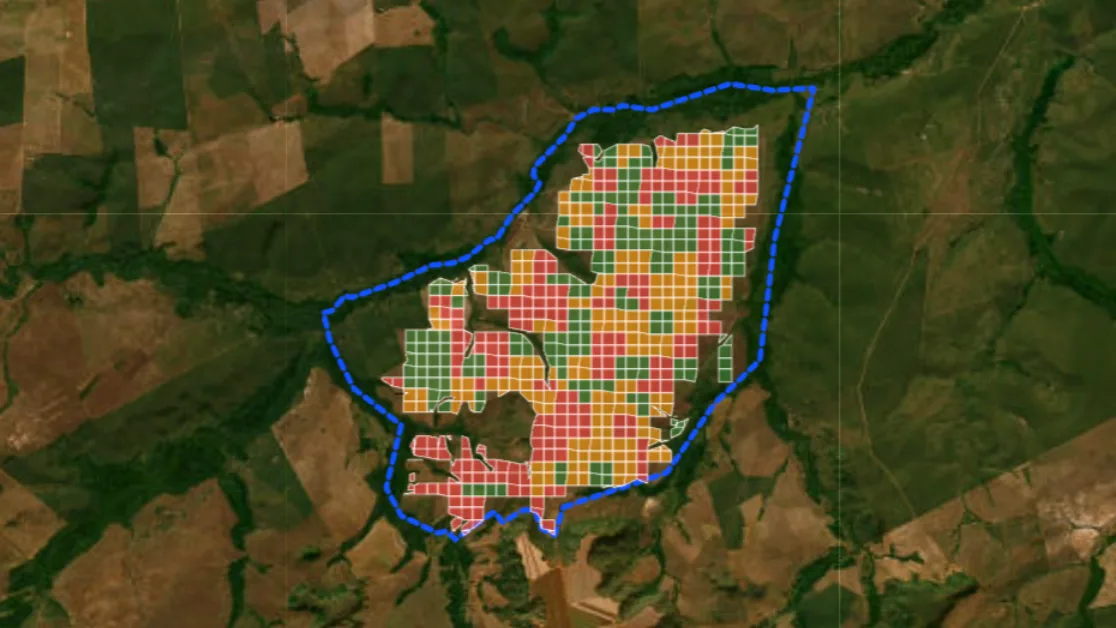 A property read plot by plot after the diagnostic: each colour is a management class, with its own method and its own cost.
The method decision weighs more than the unit price
Three broad methods cover most native restoration in Brazil: assisted natural regeneration, enrichment planting, and full planting by seedlings or direct seeding. The gap between them is far larger than the gap between two contractors quoting the same method. A systematic assessment of restoration projects in Brazil found that planting seedlings or sowing seeds cost about ten times more per hectare than assisted natural regeneration or enrichment planting (Brancalion and colleagues, Biological Conservation, 2019).
This is why the diagnostic changes the budget. It does not shave a few percent off a unit price. It decides which method each plot gets, and therefore which cost line applies. On one perimeter we analysed, about 70% of the area showed potential for natural regeneration. On another site the share will be very different, and that is precisely the point: nobody knows it before looking. The methods themselves are compared in natural regeneration, manual planting, drone seeding and hydroseeding.
Why an early price becomes a trap for both sides
A price given before the diagnostic becomes the reference in the negotiation, and it is very hard to revise afterwards. If the site turns out harder than the average, someone pays for the gap. Either the contractor absorbs it in margin and cuts corners on maintenance, or the client pays it through amendments, or the plots fail and get replanted a year later.
I would rather give no number than give one that the site will contradict. That is why we do not quote a price per hectare before the diagnostic, and why I would be wary of a contractor who does it without stating what the number assumes.
Contracting on premises: a two-stage proposal
When a buyer has to commit a budget before the diagnostic, there are several ways to handle it. One we use often is a proposal in two stages:
- A price built on explicit premises. For example: road access for machines, mostly flat and mechanisable terrain, a given vegetation type, local storage for seeds. Each premise is written in the contract.
- A check of the premises in the diagnostic. If the area turns out different from what was written, the contractor says so in writing within a fixed number of days.
- A decision point after the diagnostic. The parties either adjust the price and the calendar inside ranges set in the contract, or stop before implementation without penalty.
- Quantities that follow the site. Inputs and maintenance are paid on what each plot needs, inside those ranges, rather than on one dose applied to every hectare.
This structure appears in contracts we have signed with industrial clients. It protects the buyer as much as the contractor: the price that goes into execution is one that has been checked against the land.
What the diagnostic changes in the budget
The diagnostic produces a cost per plot instead of a cost per hectare. It starts from satellite imagery and public layers on the whole area, then adds drone flights, soil analysis and a field visit where a decision needs them. In practice it does three things to the budget:
- It takes out what does not need planting. Plots already under native vegetation in the MapBiomas annual series, or with strong regrowth, leave the planting budget and move to protection or enrichment.
- It prices the hard plots honestly. Steep, compacted or remote plots get their real cost instead of the average.
- It makes the trade-offs visible. The client can see what each method costs on each plot and decide where to spend.
On the perimeter where about 70% of the area could regenerate, the restoration budget estimate fell by about 70% once the diagnostic had moved those plots from planting to assisted regeneration. That is one result, on one perimeter. On another site the gap will be smaller, or the diagnostic will find plots that cost more than the average assumed.
"The price of a plot does not come out of a catalogue. It comes from what we have already carried out elsewhere, brought to the conditions of that plot." Pedro Bevilaqua, Environmental Engineer, MORFO
In this video, Pedro walks through how we calculate the cost of a project on a real case (in Portuguese).
How MORFO prices after the diagnostic
We prescribe the work plot by plot from the diagnostic, and we answer for the ecological result. If the plan was followed and the forest did not grow, we replant at our own cost, over several seasons, up to a ceiling fixed in advance. The price adjusts to the diagnostic within ranges written in the contract, and beyond the ceiling we sit down with the client again. It is a risk for us, and we take it because the price is built on the land we have measured, not on an average. The diagnostic itself is described on how the diagnostic works.
The useful comparison between two restoration offers is the total cost until the agency accepts the area, replanting and lost seasons included. If your budget was built on an average per hectare and you are not sure it will hold, I would be glad to look at it with you.
Frequently asked questions
How much does it cost to restore one hectare of native forest in Brazil? It depends on the plot: slope, soil, access, invasive grass and natural regrowth set the method and the cost. We give no figure before the diagnostic, which delivers a cost per plot for each option.
Why does a contractor refuse to give a price before the diagnostic? Because a price without a diagnostic is an average, and the site corrects it during execution. A contractor who quotes early either builds a margin of safety into the price or recovers the gap later.
What does a restoration diagnostic include? A reading of the whole area by satellite and public layers, then drone imagery, soil analysis and a field visit where needed. It delivers the method, calendar and cost for each plot.
Can a native forest restoration contract have a fixed price? Yes, on written premises. The price holds as long as the area matches those premises, and adjusts inside ranges set in the contract when the diagnostic shows a difference.
Is natural regeneration always cheaper than planting? Per hectare, usually yes: a Brazilian study found planting about ten times more expensive. It only works where the plot has a seed source nearby, a bank of native seedlings and pressure that can be controlled, which is what the diagnostic checks.