How long a native forest restoration project takes to start in Brazil, from site diagnostic to first planting
Quentin Franque · 2026-11-23 · 8 minutes
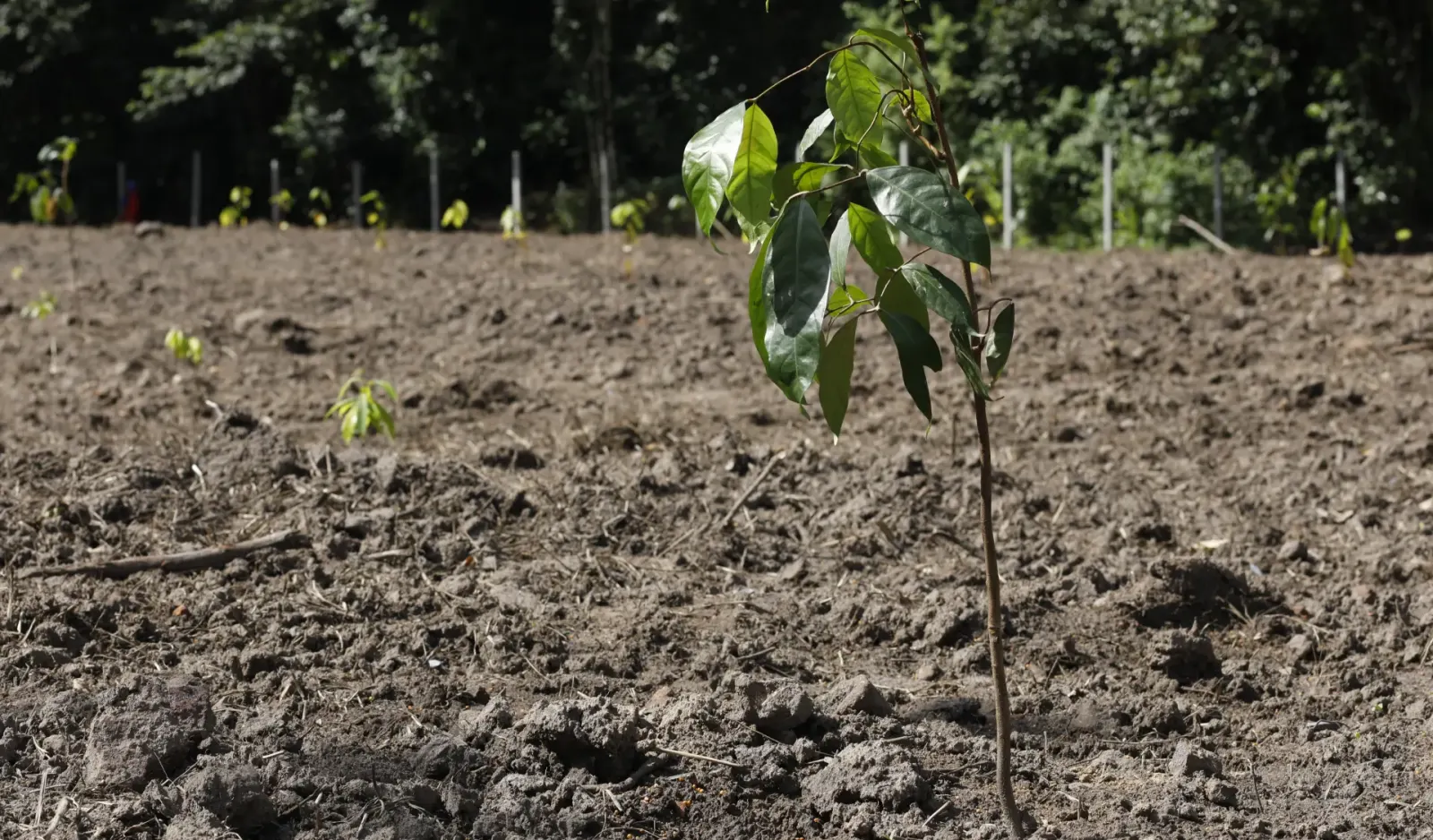
This page is for a company that has decided to restore native forest in Brazil, under a Legal Reserve deficit, an APP, a PRAD or a carbon project, and needs to know when the first seedlings can realistically go in the ground.
The short answer: the first planting depends less on the diagnostic than on the rainy season and on what has to happen between signature and planting day. The diagnostic itself can be short. What makes projects slip is the chain after it: access to the area, contractor approvals, seeds and seedlings, soil preparation. If one link is late, the project misses the start of the rains and often loses a full year.
Why the calendar is set by the rains, not by the contract
Native seedlings and seeds go in the ground at the start of the rainy season, when the soil holds water long enough for roots to establish before the dry months. In most of Brazil that window opens between October and December and closes a few months later. Technical manuals say the same: the 2013 restoration manual of the Rio de Janeiro Botanical Garden research institute recommends planting preferably at the start of the rainy period. Planting outside the window means irrigation, higher mortality, or both.
So the real question is not how many weeks the project takes, but whether everything will be ready before the rains settle on that site. For the 2026-27 season, our El Niño analysis points to rains settling two weeks or more late in 447 Brazilian municipalities, which shifts the window but does not give extra time to the steps before it (El Niño and restoration planning). Missing it has a cost we described in miss the planting window, lose a year.
The map below shows, municipality by municipality, until when the rain still favours planting this season, with El Niño.
Last month with enough rain to plant
Explore a location
The steps between the decision and the first seedling
Every project goes through the same steps, in roughly this order. Some can overlap; none can be skipped.
- Area handed over. The client names the areas, with boundaries, land titles or rights of use, and access. Until this exists, nothing else can be planned.
- Pre-analysis and diagnostic. A reading of the whole area from satellite imagery and public layers, then drone flights, soil sampling and a field visit where a decision needs them. It ends with a work plan per plot: method, species, calendar, cost.
- Decision after the diagnostic. If the land matches what the contract assumed, the plan goes ahead. If it does not, price and calendar are adjusted, or the project stops before implementation.
- Inputs secured. Native seeds and seedlings in the right species and volumes, which depends on the seed network and the nurseries in the region.
- Contractor approvals. Safety and health documentation, insurance and onboarding required by the client before a team can enter the site.
- Soil preparation. Fencing, control of invasive grass, subsoiling, fertilising or correcting the soil, in the dry season before planting.
- First planting. At the start of the rains.
What usually holds a project up
In the projects I have followed, the diagnostic is rarely what makes a project late. The delays sit after it.
- Late area definition. The plan cannot start until the client says which hectares are in. On several projects this has taken longer than the diagnostic itself.
- Approvals and onboarding. Large clients require a full safety approval of every subcontractor. It is legitimate and it takes time, and it is often started too late.
- Seeds and seedlings. The volume of native seedlings or seeds in the right species is not always available in the region in a few weeks. Seed collection happens in its own season, and a nursery needs months to produce a seedling: two to eight months for the native species listed in an Embrapa production guide, depending on the species.
- Soil preparation. It is best done in the dry season, ideally toward its end, just before the rains return: the sun dries out the roots of the brachiaria, and machines do not compact soil that is still wet. On very compacted soil, it takes several passes and deep subsoiling to loosen the ground before planting, so the calendar has to start earlier. Fertilising can sit closer to planting: on a restoration project in Maranhão, the local partner proposed fertilising along the subsoiling furrow no more than 30 days before planting in the rainy season.
On a research plot we ran with Google and Embrapa, the soil was corrected in the same weeks as the first planting, because the diagnostic had been done two months earlier (the project).
A case: a December window lost in Mato Grosso
On a project in Mato Grosso this season, the diagnostic was done and the plan agreed in time for a December planting. The window was lost anyway. The subcontractor's safety approval came late, and so did the seedlings, and the first planting moved to early January. Even that date depended on the farm finishing its fence and grass control by mid-December; without them, planting would slip to late January or February, and the season could be lost. Nothing in the method changed. A few administrative and practical links in the chain, each a few weeks late, were enough.
Another site would have had a different calendar, because the window, the access and the supply depend on where the land is. What the case shows is where to look: at what has to be true on planting day, working backwards, rather than at the diagnostic.
How to plan backwards from the rains
The planning that works starts from the planting window on that specific site and works backwards:
- Find the window first. When do the rains usually settle on this municipality, and how is this season's forecast shifting it?
- List what must be ready on that date. Area, approvals, seeds and seedlings, fence, soil prepared, team on site.
- Start the long items before signature. Seed and seedling supply, and the client's own approval process, can be launched in parallel with the diagnostic.
- Write the climate window into the contract. A delay caused by waiting for the right rains should not count as contractor delay. Contracts we sign say so.
We wrote about the earlier stage, why projects stall before they even reach planting, in why most ARR projects stall before planting.
How MORFO handles the start of a project
We start with a pre-analysis of the area from imagery and public data, which tells the client quickly whether the project is feasible and roughly what it involves, before any field visit. The diagnostic then sets the binding calendar for each plot. In the contract, the calendar that counts is the one approved at the end of the diagnostic, not the indicative one in the proposal.
This video shows how we plan a restoration across 8,000 hectares, plot by plot.
Before we sign hectares, we check that our seed network can supply the species and volumes on time. When it cannot, we say so and the calendar moves, rather than promising a planting date we would miss.
If your project needs to plant in the coming season and you are not sure the chain will hold, I would be glad to look at the calendar with you.
Frequently asked questions
How long does a native forest restoration project take to start in Brazil? It depends on the site and on the rainy season. The diagnostic can be short; what takes time is getting the area, approvals, seeds and soil ready before the rains settle.
Can native seedlings be planted outside the rainy season? Only with irrigation and a higher risk of mortality. Planting late in the rains also shortens the first growing season, which weighs most in a dry El Niño year.
What delays a restoration project after signature? Most often late definition of the areas, contractor safety approvals, seed and seedling supply, and soil preparation that has to happen before planting.
When should the soil be prepared for a restoration planting? In the dry season, ideally toward its end, just before the rains return. Very compacted soil needs several passes and deep subsoiling, so the work has to start earlier.
What happens if the planting window is missed? The project either plants late with a higher risk of mortality, or waits for the next rainy season, which usually means losing a year.