Native seedlings dying in an APP restoration: what to check before replanting
Quentin Franque · 2026-11-23 · 7 minutes
This page is for a company or a landowner whose native seedlings are dying in an APP (permanent preservation area) restoration in Brazil and who is deciding whether to replant.
The short answer: before replanting, find out why the seedlings died, plot by plot, because replanting the same seedlings in the same conditions usually repeats the loss. The common causes are invasive grass, leaf-cutting ants, water stress, poor seedlings or late planting, soil, and cattle or fire. Each one calls for a different fix, and some plots are better moved to another method than replanted.
Look before you count
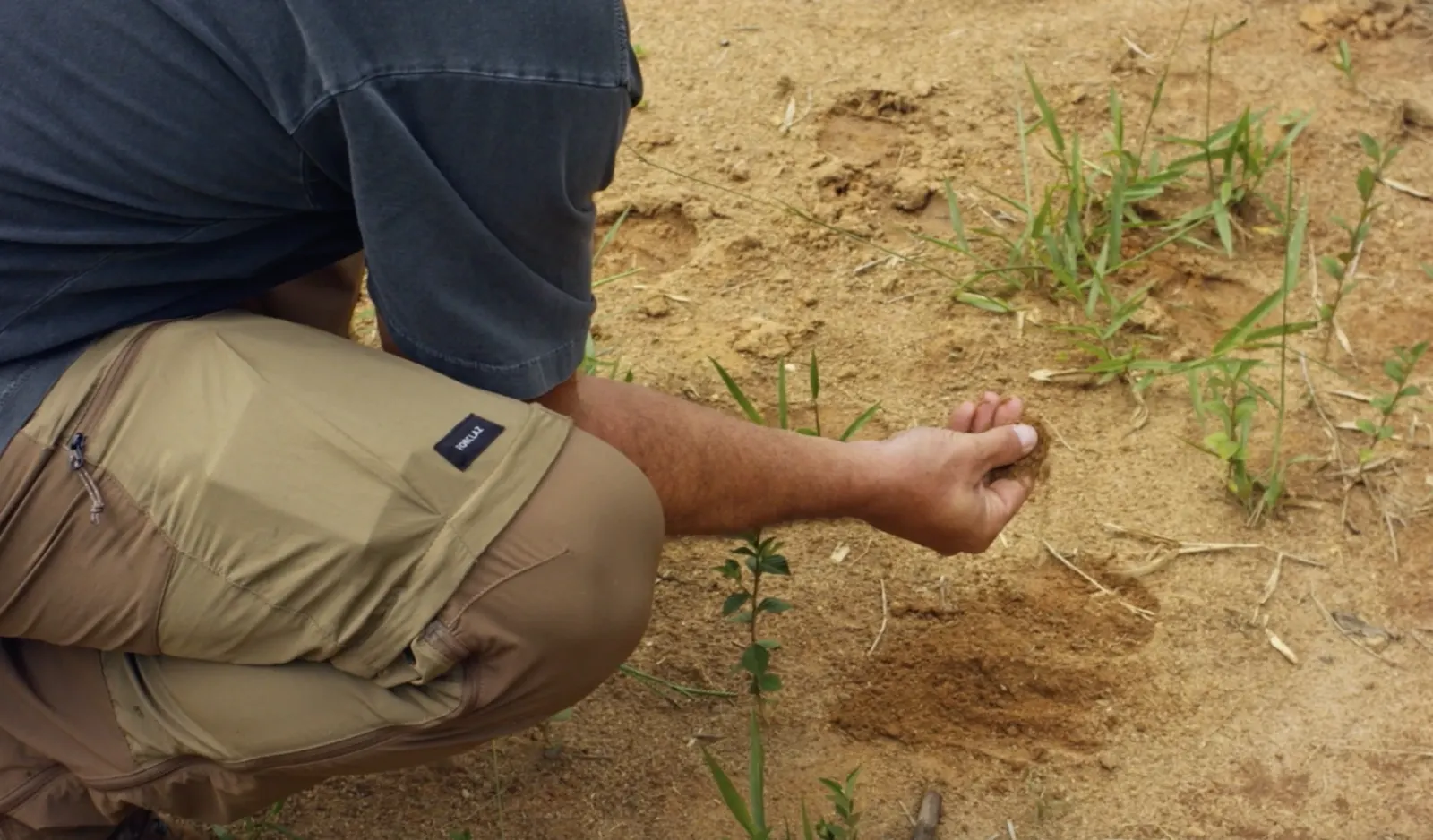
Mortality is usually discovered as one number for the whole area: "half the seedlings died". That number hides most of what matters. In one APP we visited this season, the visual mortality of a previous planting was estimated at 50 to 60%, but many seedlings were in fact alive under the brachiaria, invisible from the track. The first step is to find out where the losses are and what the surviving plants look like, not to order a second batch of seedlings.
The usual causes, and how to tell them apart
- Invasive grass. Brachiaria and other exotic grasses shade seedlings and take their water. Signs: seedlings alive but stunted or hidden under grass, losses spread across the plot.
- Water stress. Planting late in the rains, a dry spell after planting, sandy soil. Signs: seedlings dried on their feet, losses concentrated on higher or sandier ground. A hotter, drier season like the one forecast for 2026-27 makes this more likely in many regions (El Niño and restoration planning).
- Seedling quality. Root-bound or weak nursery plants, damaged in transport. Signs: losses across all plots planted from the same batch.
- Soil. Compaction, acidity or waterlogging. Signs: losses concentrated in patches that match a soil change.
- Leaf-cutting ants. One of the most frequent causes, and one of the fastest: a colony can strip a row of seedlings in a night. Signs: leaves cut in half-moons, stems left bare, trails and nests nearby.
- Cattle and fire. Cattle from neighbouring land, a dry-season fire. Signs: trampled or browsed plants, burnt lines. On one green belt this season, a neighbour's cattle trampled the planting.
- Planting technique. Holes too shallow, no crowning, fertiliser in contact with roots. Signs: losses tied to one team or one day.
Most failed plantings have more than one cause, and the mix changes across the area.
Measure where the losses are
To tell these causes apart, the losses have to be mapped, not estimated. A monitoring that covers the whole area, plot by plot, with imagery and targeted field checks, shows whether the losses follow the soil, the slope, the planting date, the batch or the fence line. That pattern is usually what reveals the cause.
The gap should show in weeks, not in year three. A plot that drifts in its first months can still be saved with maintenance. The same plot found two years later needs a full replanting. We covered how we measure survival in what is MORFO's survival rate.
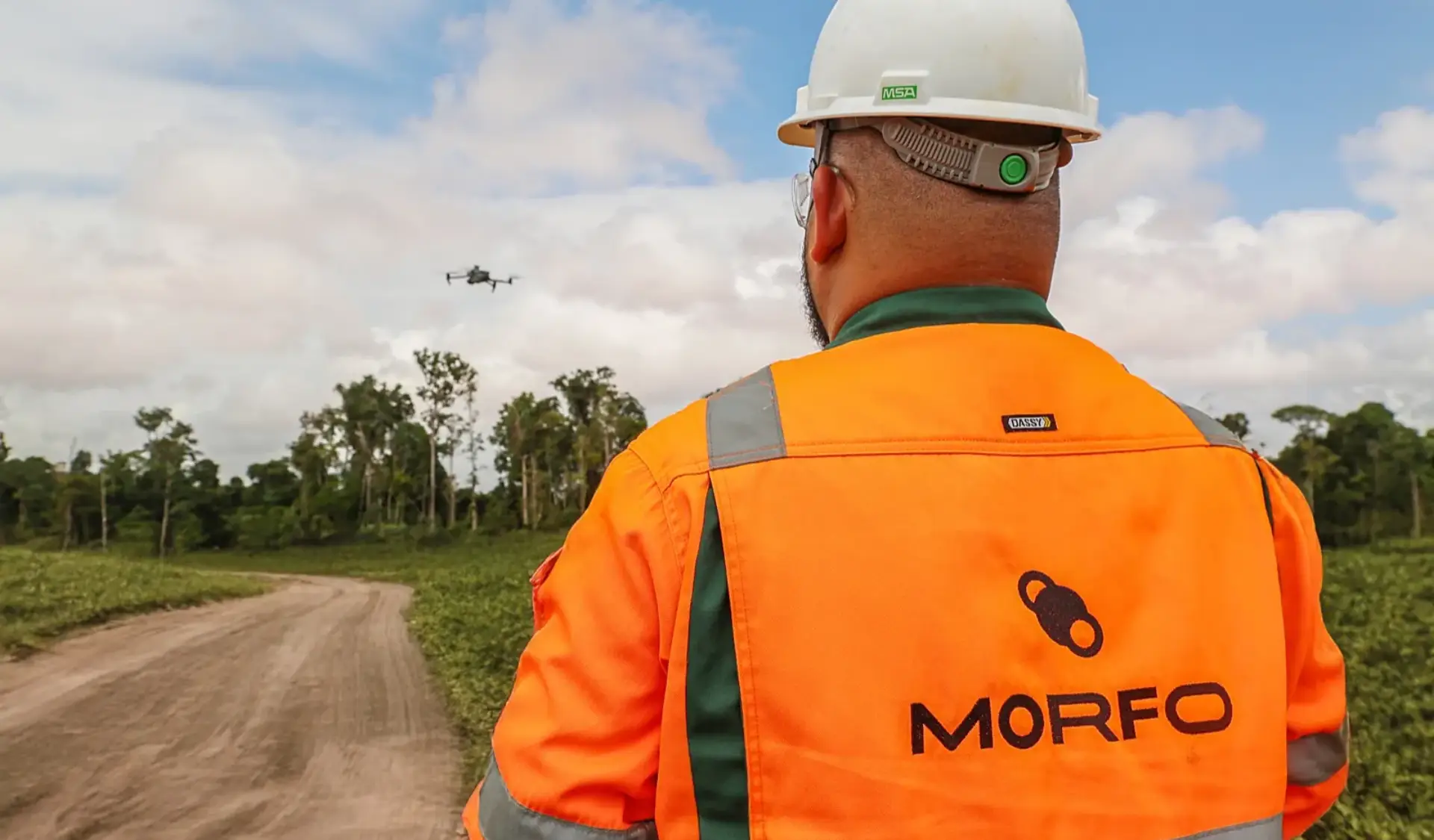 Drone monitoring over a restoration area: mapping where seedlings are lost is what reveals the cause.
Fix the cause before replanting
Each cause has its fix, and the fix comes before the new seedlings:
- Grass: maintenance rounds and crowning around each seedling, timed before the grass seeds. Where herbicide is not allowed, this takes more rounds and more labour, and the calendar should say so.
- Water stress: plant at the start of the rains, choose hardier species for dry plots, and protect the soil around each seedling where the budget allows.
- Seedlings: change the nursery or the specifications, and check batches on arrival.
- Soil: work or decompact the patches that need it.
- Ants: find the nests and control them before planting and during the first months, plot by plot.
- Cattle and fire: fencing, firebreaks, and an agreement with neighbours.
When replanting is worth it, and when to change method
Replanting is worth it when the cause has been fixed and the plot still has no other way to recover. It is not always the best move:
- Where many seedlings survived under grass, maintenance and crowning may recover the plot without replanting.
- Where natural regeneration has started, enrichment of the missing species may be enough (natural regeneration in a Legal Reserve).
- Where the soil can be worked and grass controlled, direct seeding of native species can cover the gaps at higher density.
- Where the plot keeps failing, the plan itself needs to change: species, method or calendar.
On one APP this season, the plan ended up split between direct seeding on some plots and replanting on others.
How MORFO handles losses
We monitor 100% of the area plot by plot, so a plot that drifts is identified early and gets its own corrective action, instead of the whole area being replanted. On our experimental site in Bahia, vegetation covered 96.7% of the area by April 2025, after a severe drought season (what two years of our experimental project taught us). On a pilot in another region, invasive grass cover dropped from 66% to 10% with a plan calibrated plot by plot.
When the plan was ours, the replanting is too: if the forest does not grow, we replant at our own cost, up to a ceiling fixed in advance. That makes us look hard at causes before we order new seedlings.
If your APP planting is losing seedlings and you are about to replant, I would be glad to look at it with you first.
Frequently asked questions
Why do native seedlings die after planting? Most often because of invasive grass, leaf-cutting ants, water stress after planting, poor seedling quality, unsuitable soil, or cattle and fire. Usually several causes combine.
When is replanting worth it in a restoration? When the cause of the losses has been fixed and the plot cannot recover by maintenance, natural regeneration or enrichment. Replanting without fixing the cause repeats the loss.
What is an acceptable mortality rate in a native restoration? It depends on the site and the method, and contracts set their own threshold. What matters more is where the losses are and why, because that decides the fix.
How do you control brachiaria in an APP without herbicide? With repeated mechanical maintenance and crowning around each seedling, timed before the grass seeds, and by closing canopy faster with denser planting or seeding.
Can herbicide be used in an APP in Brazil? It depends on the state and on the product. Mato Grosso bans agrochemicals in APPs and Legal Reserves, and other states restrict spraying near water. Check the state rule and the licence before planning chemical control.