How to choose a native forest restoration company: what to ask before signing
Quentin Franque · 2026-11-28 · 8 minutes
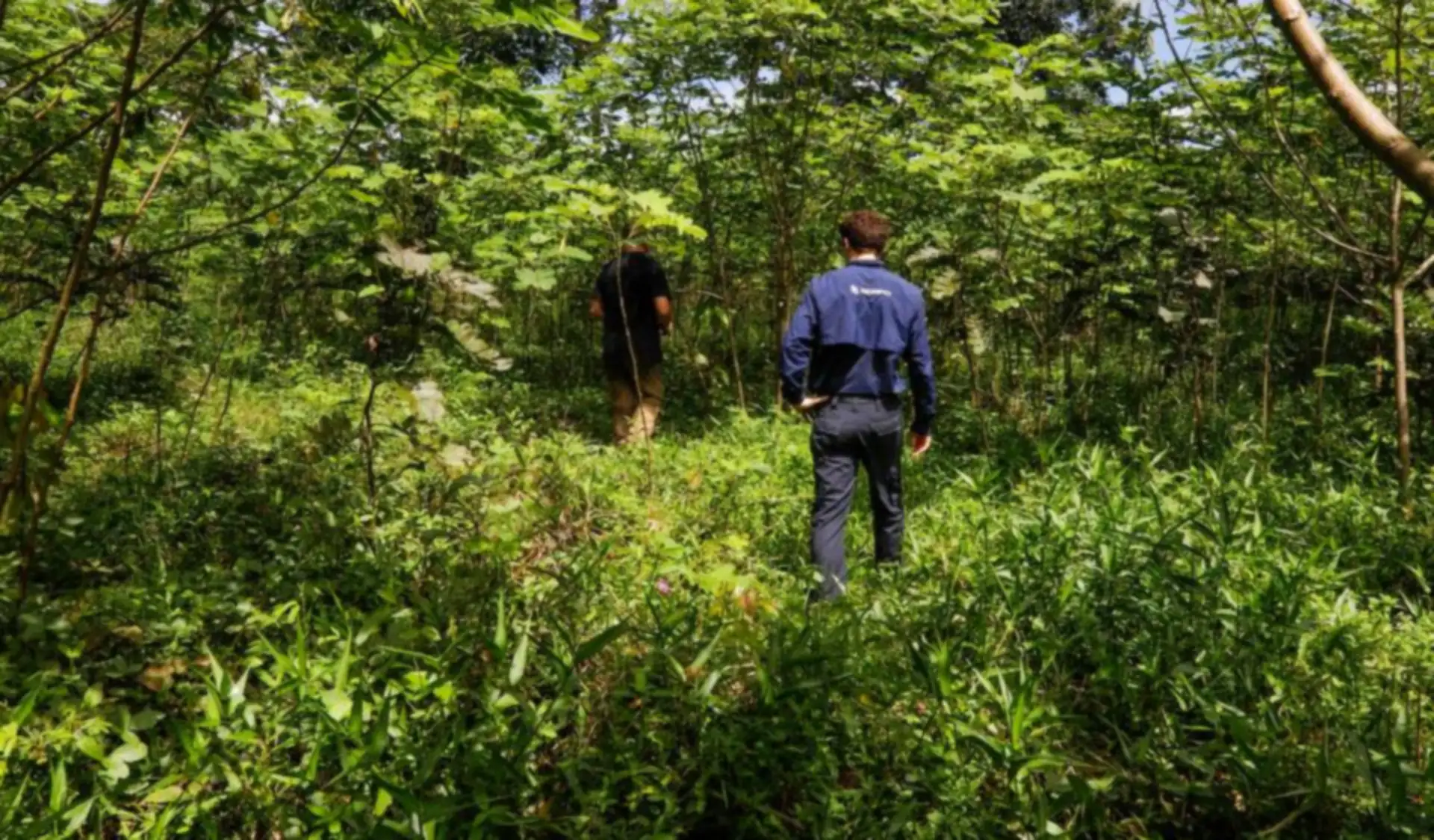
This page is for a landowner, a company with a restoration obligation or a fund that is about to hire someone to restore native forest and has two or three proposals on the table. It is written by MORFO, which is one of the companies you might be comparing. The questions below are the ones we would ask in your place, including of ourselves.
The short answer: choose the company that has read your area before pricing it, that can explain why it uses each method where it does, and that writes down what happens if the forest does not grow. Price per hectare and the size of a company's portfolio say little on their own. Two proposals at different prices are often two different projects, because each company has assumed a different area.
Three kinds of companies you will meet
Before comparing answers, it helps to know what each proposal is for. In Brazil, the companies that restore native forest broadly fall into three groups. None is better in itself. They answer different needs.
- Planting contractors. They carry out a plan: soil preparation, planting, maintenance. They are often local, know the season and the labour, and are the right choice when someone else has already designed the plan and will answer for it.
- Project developers. They build and own a project, usually for carbon credits, and often bring the land, the financing and the buyer together. Restoration is one part of their business model.
- Restoration integrators. They design the strategy for each plot from a diagnostic, coordinate the local operators who do the work, and answer for the ecological result. MORFO is in this group.
If you already have a technical plan and a team to supervise it, a good planting contractor may be all you need. If you need someone to decide what to do where, and to carry the risk that it does not work, the questions below matter more. Our map of who restores native forests in Brazil describes the other actors, from alliances to seed networks.
1. What did you look at on my area before giving a price?
This is the question that separates most proposals. A price given over the phone, or from a polygon on a map, rests on assumptions the company has not checked: how compacted the soil is, how much grass has to be controlled, how much is already regrowing on its own, whether machines can get in.
A solid answer describes what was measured, or what will be measured before the price is final: a remote pre-analysis of the area, then a field diagnostic with soil samples and a reading of each plot. The price comes as a range, with the premises it rests on written down, and a point after the diagnostic where it is confirmed.
A weaker answer is a single price per hectare for the whole area, the same as for the last client. It is not dishonest. It simply means the company will discover your area once it is on site, and that the gap between its assumption and the land will be paid by someone, usually you.
2. Which method, where, and why?
A large area is rarely uniform. One part regrows by itself if cattle and fire are kept out, another needs seedlings because grass is too strong, another can be sown directly because the soil is workable and seeds are available. A plan that applies one method everywhere is usually cheaper to write and more expensive to run.
A solid answer shows the area split into plots, with a method for each and the reason for it, including plots where the recommendation is to protect and wait. Ask what would make the company change the method on a plot, and how it will supply and staff several methods in the same planting season.
A weaker answer is the method the company happens to own. A company with a nursery tends to propose seedlings, a company with drones tends to propose drones. Both can be right on some plots. The question is whether the choice came from your land or from their equipment. We explain how that choice is made in what is the best method to restore a native forest.
3. Can the seeds and seedlings arrive before the rains?
Native forest restoration in Brazil runs on one planting season a year. If seeds or seedlings arrive after the rains have settled, the plot waits a year, or it is planted late and loses much of its survival. This is the most common cause of delay we see, and it rarely appears in a proposal.
A solid answer names the volumes needed, where they come from, and when they will be on site, with a fallback if a species is missing.
A weaker answer assumes the supply will be there. We wrote about what a missed window costs in miss the planting window, lose a year.
4. What exactly is committed, and who pays if it fails?
This is where proposals differ the most and say the least. In many contracts, the company is paid for each seedling planted and replants a limited share of losses. Beyond that, replanting is a new invoice.
A solid answer puts result indicators in the contract (survival, vegetation cover, density of native plants) with dates, states what the company does if a plot falls short, up to what ceiling, and lists the events it does not cover, such as fire, third-party cattle or an extreme drought. Ask to see the clause, not a sentence in the presentation.
A weaker answer is "we guarantee survival" with no indicator, no date and no ceiling. A guarantee given before anyone has read the land is either very expensive or not worth much. Our article on who pays when a restoration fails goes through the clauses one by one, and the one on terms of reference shows how to ask for them in a tender.
5. How will I know it is working, and can the agency check it?
A restoration is judged two or three years after planting, by you, by the state environmental agency or by an auditor. What they will look at should be decided at the start.
A solid answer says what is monitored, how often, on how much of the area, and what you receive: maps, indicators by plot, the corrective actions taken. It uses the indicators the agency or the standard will check, so the proof exists when it is asked for.
A weaker answer is a set of photos taken on planting day. They show that work was done, not that a forest is growing.
One check worth more than a reference list
Ask to visit, or to see monitoring data from, an area the company planted two or three years ago. Planting day looks the same everywhere. Year three shows whether the method was right for the land.
How MORFO answers these questions
We read the area before pricing it: a remote pre-analysis, then a field diagnostic that sets the method and the cost plot by plot. We coordinate local operators for the work, and we put the result in the contract. If the forest does not grow, we replant at our own cost, up to a ceiling fixed in advance, with the exclusions named. Every failure costs us money, so our interest is a plan that works the first time.
That does not make us the right choice for every project. If you already have a plan and only need hands on the ground, a local planting company will often cost less. If you are comparing proposals and are not sure they describe the same project, I would be glad to look at them with you.
Frequently asked questions
How do I compare two restoration proposals with different prices? Check whether they describe the same area. List the premises behind each price (soil preparation, grass control, share left to natural regeneration, replanting) and ask each company to price the other's premises. The gap usually narrows or explains itself.
Is the cheapest price per hectare a good sign? Not on its own. A low price can mean an efficient plan, or a plan that has not accounted for what is on the land. Ask what it includes and what happens if a plot fails.
Should a restoration company guarantee results? On plots it has diagnosed and planned itself, it can, with indicators, dates, a ceiling and named exclusions. A guarantee given without a diagnostic is hard to honour.
What is the difference between a restoration integrator and a planting company? A planting company carries out a plan. An integrator designs the plan plot by plot, coordinates the work and answers for the ecological result.
What should a restoration contract include? The area and the result expected, the premises behind the price, result indicators with dates, what happens if a plot falls short, the exclusions, and a decision point after the diagnostic.