A native forest restoration company in Brazil
MORFO restores native forest in the Amazon, Cerrado and Atlantic Forest, from Rio de Janeiro. It starts with a diagnostic of your land, which shows whether the project is viable and what it will cost. Then MORFO designs the project, coordinates local operators and answers for the result by contract.
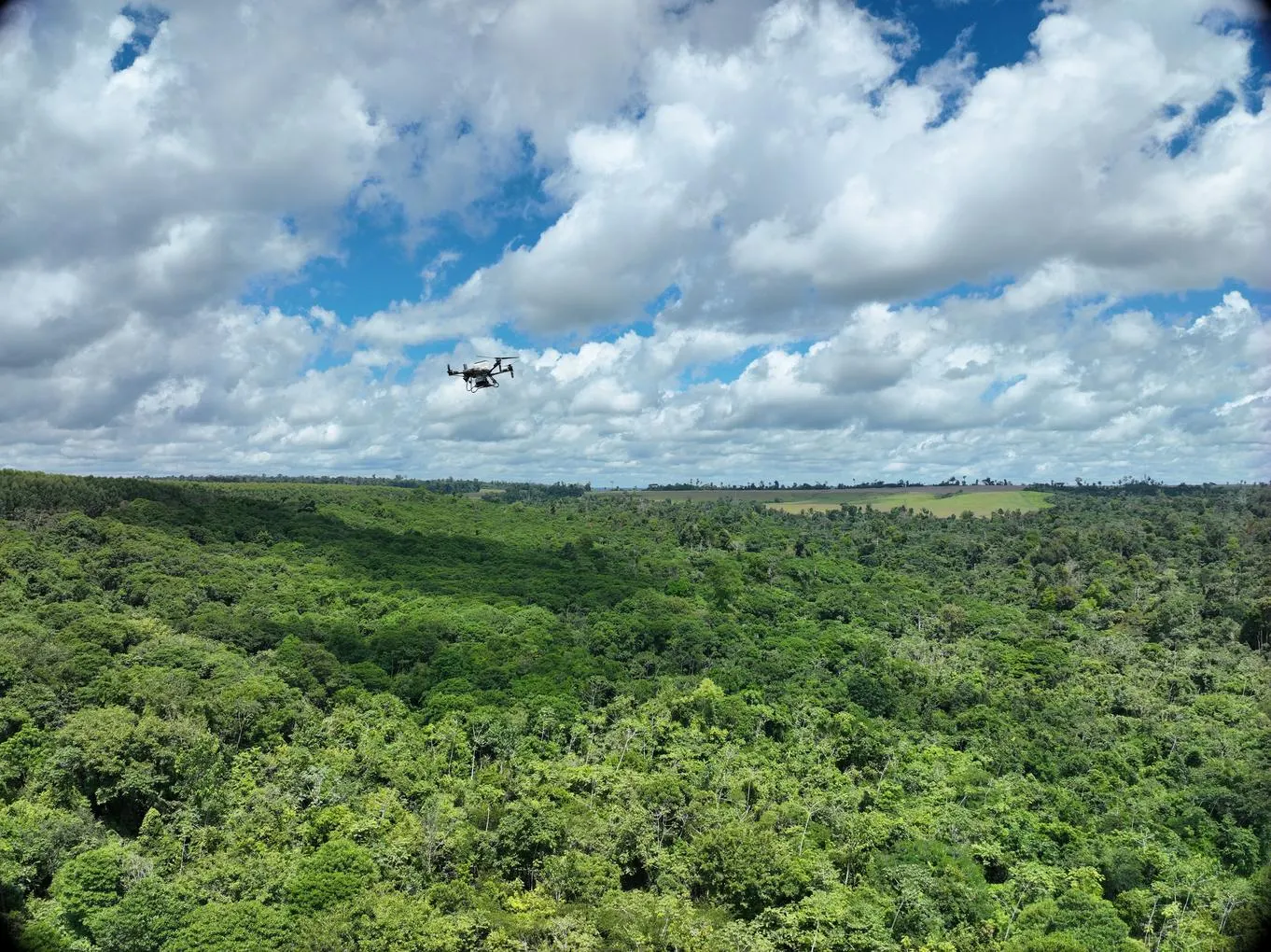
Who MORFO is
MORFO is a Franco-Brazilian native forest restoration company. It has been based in Rio de Janeiro since January 2023 and works in the Amazon, the Cerrado and the Atlantic Forest.
The company started in 2021 in French Guiana, on land left behind by gold mining.
MORFO has analysed more than 60,000 hectares and works from a catalogue of 490 native species across the three biomes. Its methods are built and tested with Embrapa, UFV, UFSCar and IRD.
About MORFOResults measured in the field
In French Guiana, on land left behind by gold mining, vegetation cover went from 0 to 81% in four years, with 588 trees per hectare on average and 21 species. The project was validated by the environmental authorities.
See the French Guiana projectOn MORFO's experimental area in Bahia, in the Atlantic Forest, vegetation covered 96.7% of the surface in April 2025, after a season of severe drought.
What two years of an experimental project taught usMORFO now has 2,142 hectares under management across three biomes and more than 130 restoration protocols.
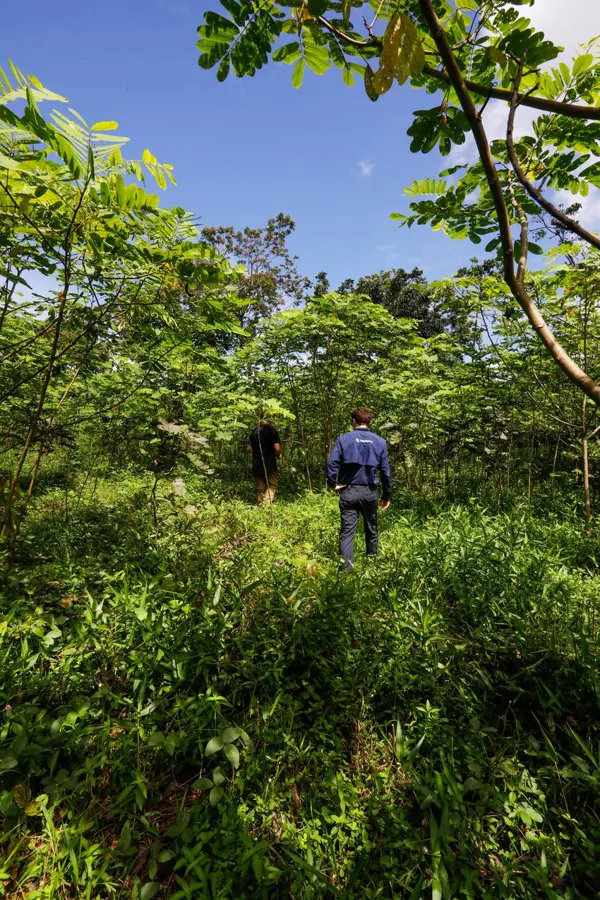
How a project with MORFO works
Diagnose the land
MORFO reads your land before any quote. A remote pre-analysis, free and without commitment, crosses more than 15 data layers and returns a go or no-go within a few working days. The field diagnostic follows: satellite, drone and field data go into one reading, which sets the method and the cost of each plot.
Design the project
MORFO chooses the method plot by plot: assisted natural regeneration where the diagnostic shows native vegetation coming back on its own, direct and mechanised seeding on large areas, seedlings on sensitive plots and for the species that need them, and drones where speed and reach make the difference. Most plans combine several methods. The plan already carries a cost range, with a floor and a ceiling, before any crew is mobilised.
Deliver with local operators
Qualified local operators carry out planting and maintenance. MORFO selects and coordinates them under its own protocols and remains your single point of contact. MORFO follows the area plot by plot, intervenes on the plot that drifted from its target and records each intervention with dated, georeferenced evidence. Active maintenance lasts about three years.
Answer for the result
Survival and density targets are set plot by plot from the diagnostic and written into the contract. If a target is missed, MORFO carries out the corrective work at its own cost, on the cases the contract covers.
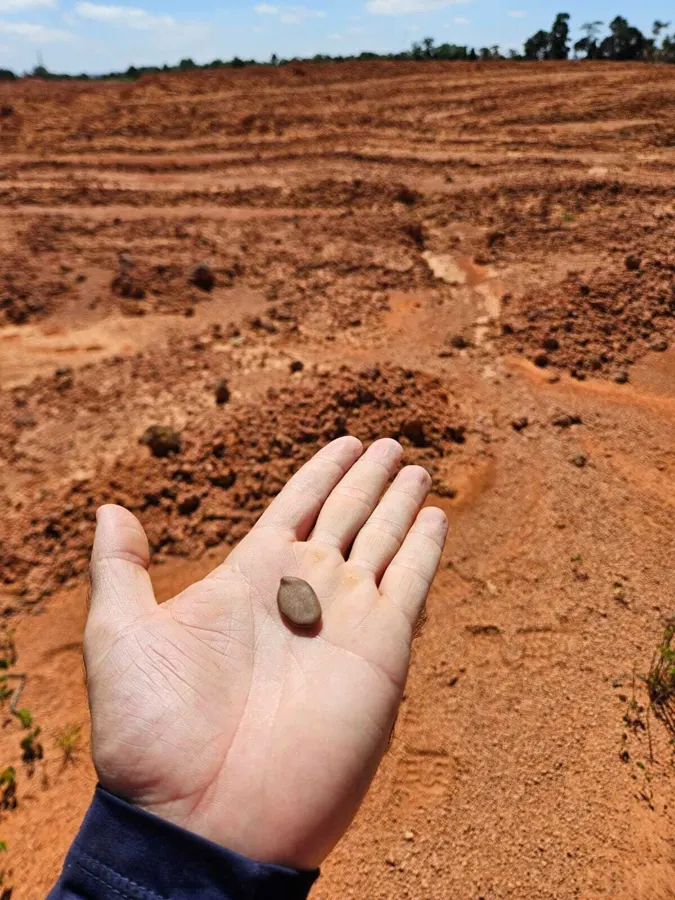
Secure the seeds before taking on the hectares
MORFO works with a seed chain registered with RENASEM, Brazil's national seed registry, a catalogue of 490 native species and a network of about 1,500 seed collectors in Brazil.
The species mix is set plot by plot from the diagnostic. Before taking on hectares, MORFO measures how much the local collector network can gather, and how fast.
Who MORFO works for
Rural landowners, who want to know, before investing, whether restoring an area is viable and what it will cost.
Landholders and fundsAPP and Legal Reserve compliance, for landowners and companies that must restore a Permanent Preservation Area or a Legal Reserve with native species, with the result measured in the field and documented.
Corporate complianceCompanies with restoration targets, with restoration commitments, licensing conditions or ARR carbon projects.
Carbon projects
Questions from people about to hire
Which forest restoration company should I hire in Brazil?
It depends on what you need. To restore with native species and know the cost before committing, look for a company that diagnoses the land before quoting, chooses the method plot by plot and writes the targets into the contract. Also ask who carries out the planting and who pays when a target is missed. MORFO works this way in the Amazon, the Cerrado and the Atlantic Forest.
Who pays when a restoration failsHow much does it cost to restore one hectare of native forest?
MORFO does not publish a single price per hectare, because each plot costs what its slope, soil, access, invasive grasses and natural regeneration make it cost. The diagnostic gives the number for your land, plot by plot. The first reading is free, and the field analysis has a fixed fee agreed before it starts. On one project, the right mix of methods cut the cost per hectare by 34% on the same perimeter.
Why the cost per hectare changes after the diagnosticHow long does a forest restoration take?
The first reading of your land comes back within a few working days. Planting happens at the start of the rainy season, which opens between October and December in most of Brazil, so the project calendar is built around that window. After planting, active maintenance lasts about three years, until the canopy starts to close, and monitoring continues after that. Three years of growth is vegetation cover with a canopy in formation; a forest takes decades.
How long it takes to start a projectWhich method should I choose: natural regeneration, direct seeding or seedlings?
The method is chosen plot by plot, from the diagnostic. Assisted natural regeneration works where the plot has a seed source nearby, a bank of native seedlings and pressure that can be controlled. Direct seeding covers large areas quickly. Seedlings cost more in labour, nurseries and logistics, so they go to sensitive plots and to the species that need them. Most plans are hybrid.
Direct seeding or native seedlingsHow does the result guarantee work?
MORFO sets the ecological targets plot by plot from the diagnostic and writes them into the contract. It follows the result until the targets are met. If a target is missed, adaptive management kicks in and MORFO carries out the corrective work at its own cost, on the cases the contract covers. Fire, extreme drought and comparable events fall under the contract's loss-event clauses, not under the performance guarantee.
Does MORFO handle APP and Legal Reserve restoration?
Yes. MORFO designs and coordinates the restoration of Permanent Preservation Areas and Legal Reserves with native species, and documents the result measured in the field. The diagnostic shows how much of the area comes back through natural regeneration and where planting is needed.
Natural regeneration in the Legal ReserveIs there a minimum project size?
The model works best from about 50 hectares, with real economies of scale above 500. Smaller areas are assessed case by case, for pilots and research plots.
Send your land.
The first reading is free and comes back within a few working days, with a go or no-go.